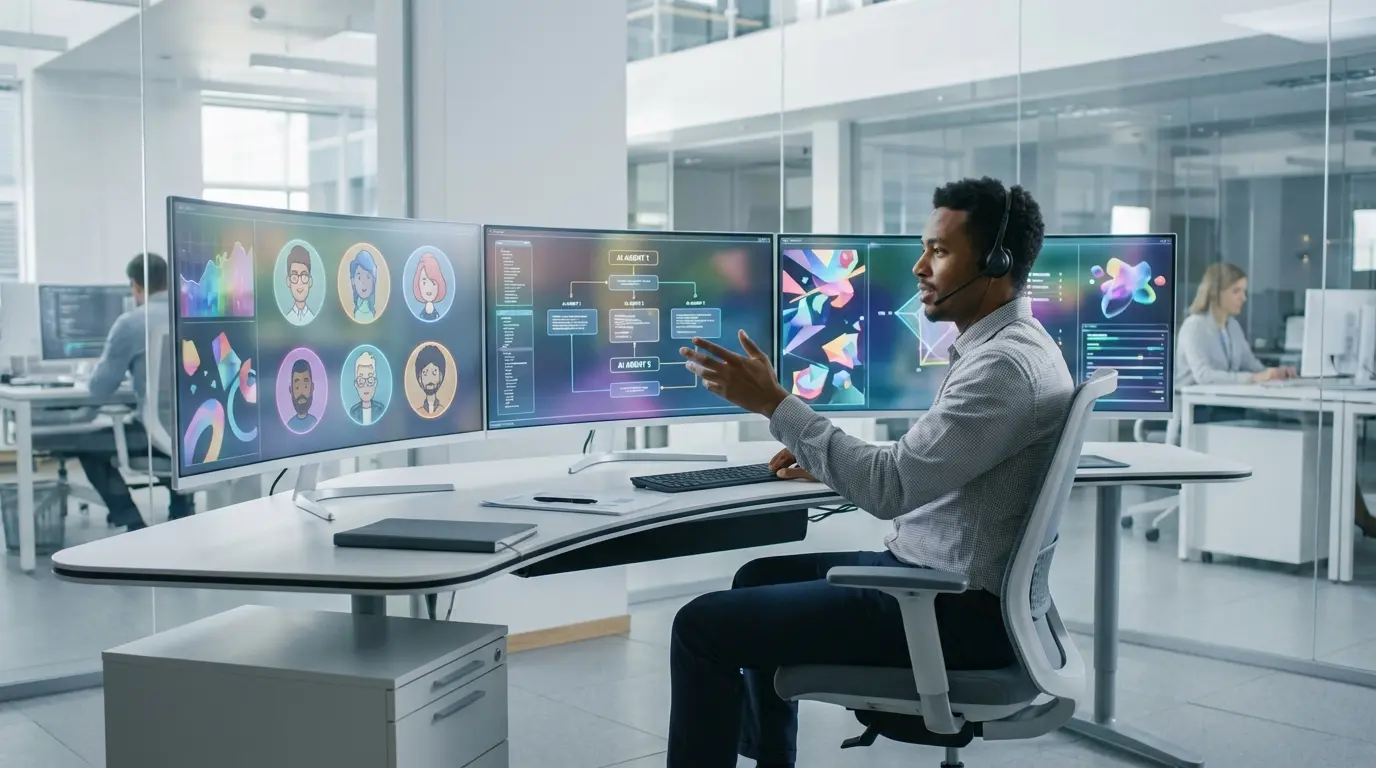
The era of the simple chatbot appears to be drawing to a close, replaced by a new paradigm where humans act less as conversational partners and more as supervisors. On Friday, the artificial intelligence landscape shifted significantly with major announcements from industry leaders, signaling a move toward autonomous “AI agents” designed to handle complex workflows. According to reports from Ars Technica and other outlets on February 6, 2026, both Anthropic and OpenAI have unveiled technologies that pitch a future where users manage teams of digital workers rather than typing into a single prompt box.
This strategic pivot focuses on integrating AI deeply into enterprise environments, moving beyond text generation to task execution. With the release of Anthropic’s Claude Opus 4.6 and OpenAI’s new Frontier platform, the industry is betting that the next wave of productivity will come from orchestration and management, not just conversation.
Anthropic has released Claude Opus 4.6, a model explicitly designed to function as a “frontier model” for enterprise tasks. Unlike its predecessors, which primarily excelled at one-on-one interaction, Opus 4.6 introduces a feature called “Agent Teams.” This capability allows users to split complex projects across multiple specialized agents that work in parallel. According to company details, these agents can coordinate directly with one another to complete distinct parts of a job, such as combining regulatory filings, market reports, and internal data into a single analysis.
The model boasts a massive 1 million-token context window, enabling it to process vast amounts of documentation or extensive codebases in a single session. Reports indicate that Opus 4.6 is capable of working across dozens of tools simultaneously and is designed to recover from errors without human intervention. Early benchmarks suggest high reliability, with the model scoring 90.2% on the BigLaw Bench—the highest of any Claude model to date. Furthermore, Anthropic is integrating this capability directly into office software, with a research preview launching for Microsoft PowerPoint and upgrades for Excel.
What Is OpenAI Frontier and How Does It Manage Agents?
While Anthropic is upgrading the model itself, OpenAI is focusing on the infrastructure of control. The company launched OpenAI Frontier, a new platform described as an “AI agent orchestrator.” The goal of Frontier is to help enterprises build, deploy, and manage AI agents that perform tangible work, bridging the gap between raw model capabilities and reliable business production.
Frontier is pitched as a single platform to control various AI agents, effectively turning them into “real-world helpers.” Instead of a chat interface where a user creates content, Frontier provides a management layer where businesses can oversee agents executing long-horizon tasks. This release coincides with the launch of GPT-5.3-Codex, a model that OpenAI claims is 25% faster and capable of handling longer coding tasks without losing context.
Why Is the Industry Shifting from Chatbots to Supervisors?
The simultaneous releases highlight a broader trend: the novelty of the “chatbot” is fading in favor of utility. Wall Street and enterprise customers are increasingly questioning the return on investment for simple text generators. By moving toward agentic workflows, tech giants are aiming to solve the “last mile” problem of AI—getting the software to actually do the work rather than just talk about it.
This shift requires a change in user behavior. Instead of prompting a bot and waiting for a reply, workers are expected to assign goals to a team of agents and review the output. The focus is on “supervising” autonomous tasks that might take hours or days, rather than engaging in a rapid-fire back-and-forth session.
Analysis
The move to agent management represents a maturation of the generative AI market. For years, the primary metric of success was the quality of text or code generation. Now, the metric is autonomy and reliability. Anthropic’s “Agent Teams” and OpenAI’s Frontier platform acknowledge that for AI to be truly viable in a corporate setting, it must function reliably within complex, multi-step workflows. The high benchmark scores and integration with standard office tools suggest that 2026 will be the year AI moves from a creative assistant to a managed workforce.
What This Means
- New Skill Sets: Workers will need to learn how to architect and supervise agent workflows rather than just prompt engineering.
- Enterprise Integration: Tools like Frontier aim to make AI agents safe and reliable enough for mission-critical business processes.
- Productivity Gains: Parallel processing by “Agent Teams” could significantly reduce the time required for complex analysis and document creation.
Source: Original Article