
AI & Machine Learning

AI Video Analytics for Dark Data: Inside InfiniMind

Have you ever thought about how much video footage is recorded every single day? From security cameras and retail surveillance to endless hours of Zoom meetings and broadcast archives, the world is constantly hitting “record.” But here is the problem: almost nobody hits “play” to analyze it all.

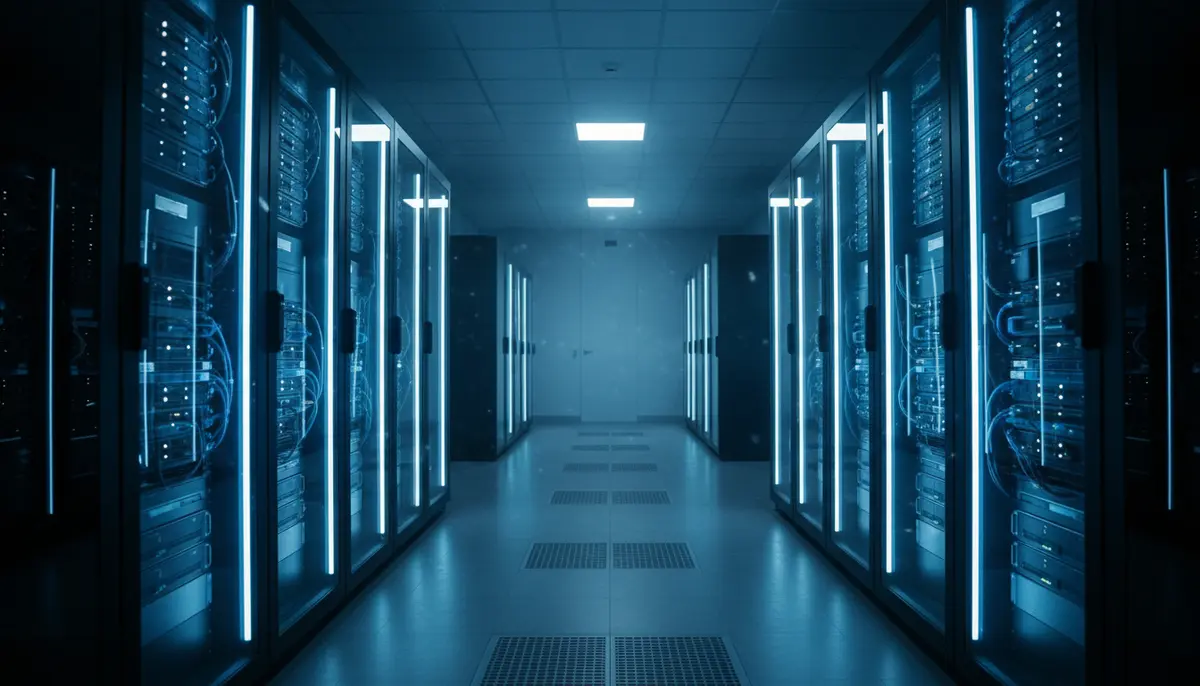
This massive stockpile of footage is what the industry calls “dark data.” It sits in servers, costing companies millions in storage fees, while the insights hidden inside remain completely opaque. It is a passive archive, not an active asset.

That is exactly the problem InfiniMind Inc. wants to solve. Highlighted in TechCrunch on February 9, 2026, this new enterprise AI startup is making waves not just for its technology, but for its pedigree. Founded by former leaders from Google Japan, InfiniMind is building the infrastructure to turn these vast, unused video archives into searchable, actionable business intelligence.

What makes ‘Dark Data’ so hard to crack?

You might be wondering, “Don’t we already have AI that can look at pictures?” We do, but video is a different beast entirely. While general-purpose multimodal models like Gemini or GPT-5/GPT-5.3 have become incredibly good at describing a static image, they often struggle with the heavy lifting required for enterprise-scale video archives.

The challenge isn’t just identifying a person or a car; it is about privacy, scale, and context. Most current tools lack the specialized infrastructure to churn through petabytes of proprietary data securely. They also struggle with the “why” and “when.” InfiniMind aims to bridge this gap by providing a domain-specific layer that sits on top of this storage, transforming it from a digital graveyard into a queryable database.

Illustration related to AI Video Analytics for Dark Data: Inside InfiniMind

How does InfiniMind ‘understand time’?

This is where the technology gets interesting. According to the company’s launch materials, their AI is designed to do more than just object detection. It is built to “understand time” and “cause and effect.”
Think about the difference between seeing a photo of a shattered vase and watching a video of why it shattered. A standard model sees broken glass. InfiniMind’s infrastructure is designed to understand the narrative arc: a person walked by, their bag snagged the pedestal, the vase fell, and then they reacted. By analyzing these complex temporal behaviors, the system can reconstruct timelines and explain the sequence of events, rather than just labeling pixels.

Who actually needs this technology?

While the technology sounds futuristic, the use cases are surprisingly grounded. The startup, which is associated with the studio IMAGINE IF Labs, is targeting sectors where understanding behavior is critical.

  • Retail: Instead of just counting foot traffic, retailers could analyze customer shopping decisions. Why did a customer pick up a product, hold it for ten seconds, and put it back? That is a narrative insight that static data misses.
  • Law Enforcement: Reconstructing timelines from multiple video sources is currently a manual, labor-intensive nightmare. InfiniMind aims to automate the stitching together of evidence to create a coherent timeline of events.
  • Media: For broadcasters sitting on decades of archives, this tool could unlock deep insights and make finding specific historical clips instant.
Diagram related to AI Video Analytics for Dark Data: Inside InfiniMind

The Bigger Picture: From Storage to Intelligence

The launch of InfiniMind signals a significant pivot in the enterprise market. for years, video data has been viewed as a cost center—a necessary burden of storage. By unlocking the value in proprietary video data, InfiniMind is effectively trying to turn that cost center into a source of business intelligence.

This comes at a time when the industry is hungry for compute power. In early 2026, Alphabet Inc. announced a massive CAPEX increase to the tune of $175-185 billion to support AI infrastructure. While giants fight over general foundation models, specialized players like InfiniMind (and competitors like Twelve Labs) are betting that the real value for businesses lies in secure, domain-specific applications that respect the complexity of time.

For the enterprise, the ability to search a video archive as easily as a text document isn’t just a convenience; it is a fundamental shift in how they view their own history. It turns the lights on in the dark data warehouse.

Get our analysis in your inbox

No spam. Unsubscribe anytime.

Share this article

Leave a Comment