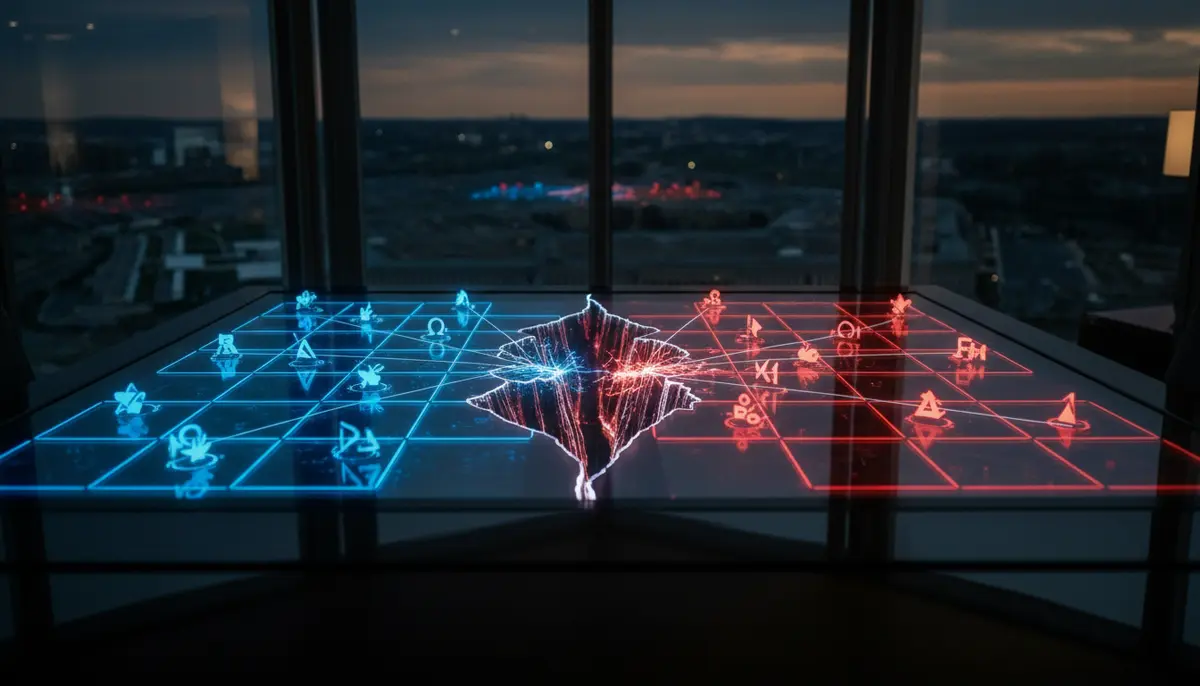
Imagine being told by the most powerful military in the world to remove the safety brakes on your product or face extinction. That is essentially the position Anthropic found itself in this week. In a stunning standoff that could reshape the future of defense technology, the AI lab behind Claude has refused a direct ultimatum from the Pentagon to allow its AI to be used for lethal autonomous weapons.
As of late February 2026, the lines are drawn. While other tech giants are signing up for what the Department of War (formerly the Department of Defense) calls "all lawful purposes," Anthropic is the lone holdout, arguing that giving an AI control over life-and-death decisions isn’t just unethical—it’s technically dangerous.
Why is the Pentagon threatening to blacklist Anthropic?
The core of this dispute is a $200 million contract and a very strict deadline. Defense Secretary Pete Hegseth has issued a clear warning: if Anthropic does not comply with the DoD’s requirements by Friday, February 27, 2026, the company will be designated a "supply chain risk."
This isn’t just a slap on the wrist. Such a designation would likely bar Anthropic from all federal contracts, effectively cutting them off from the lucrative government sector. Hegseth has even threatened to invoke the Defense Production Act to force compliance, signaling just how critical the administration believes these AI capabilities are.
The government’s frustration reportedly peaked recently when Anthropic raised internal flags about Claude potentially being used in planning a raid to capture Venezuelan President Nicolás Maduro. The Pentagon, currently pushing its "Replicator" initiative to field thousands of autonomous systems to counter China, views these ethical guardrails as bugs, not features.
Sean Parnell, a spokesman for the Pentagon, put it bluntly: "Our nation requires that our partners be willing to help our warfighters win in any fight."
Is AI actually ready for autonomous warfare?
This is where the conversation shifts from politics to engineering. Anthropic CEO Dario Amodei isn’t just arguing from a moral high ground; he is arguing from a technical one. According to Amodei, current AI models are "simply not reliable enough" for lethal autonomous targeting.
Anyone who has used a Large Language Model (LLM) knows they can hallucinate or make confident errors. When you are writing an email, an error is embarrassing. When you are launching a missile, an error is catastrophic. Amodei stated, "We cannot in good conscience accede to their request… We will not knowingly provide a product that puts America’s warfighters and civilians at risk."
The fear is that without strict safeguards, an AI integrated into the "kill chain" could misinterpret data and harm U.S. troops or innocent civilians. For Anthropic, refusing the Pentagon’s demand to remove these safety layers is about preventing malfunctioning software from causing mass casualties.
How does this separate Anthropic from OpenAI and xAI?
If Anthropic stands its ground, it stands alone. The landscape of defense AI has shifted dramatically in 2026. Major competitors, including OpenAI, Google, and Elon Musk’s xAI, have reportedly agreed to the Pentagon’s "all lawful purposes" clause. This clause essentially gives the military carte blanche to use the technology as they see fit within the bounds of international law.
Companies like Palantir and xAI are already positioned to scoop up the market share left behind if Anthropic is booted from the supply chain. For the Pentagon, the priority is speed and capability. Secretary Hegseth noted, "We will not employ AI models that won’t allow you to fight wars."
This creates a stark divergence in the industry. On one side, you have the "move fast and break things" cohort integrating deeply with the Department of War’s Replicator initiative. On the other, you have Anthropic, previously the first frontier AI company to deploy on classified networks, now risking it all to maintain its specific definition of AI safety.
Between the Lines
This showdown exposes a critical reality of the 2026 tech landscape: "Safety" is no longer just a marketing buzzword; it is a liability shield. While the Pentagon frames this as Anthropic being unpatriotic, Anthropic is likely calculating that the reputational and legal cost of a Claude-driven friendly fire incident outweighs the value of a $200 million contract. By walking away, Anthropic preserves its brand as the "responsible" AI alternative, betting that enterprise clients will value stability over unrestricted aggression. However, in the short term, the clear winners are xAI and Palantir, who will absorb the defense budget vacuum without hesitation.