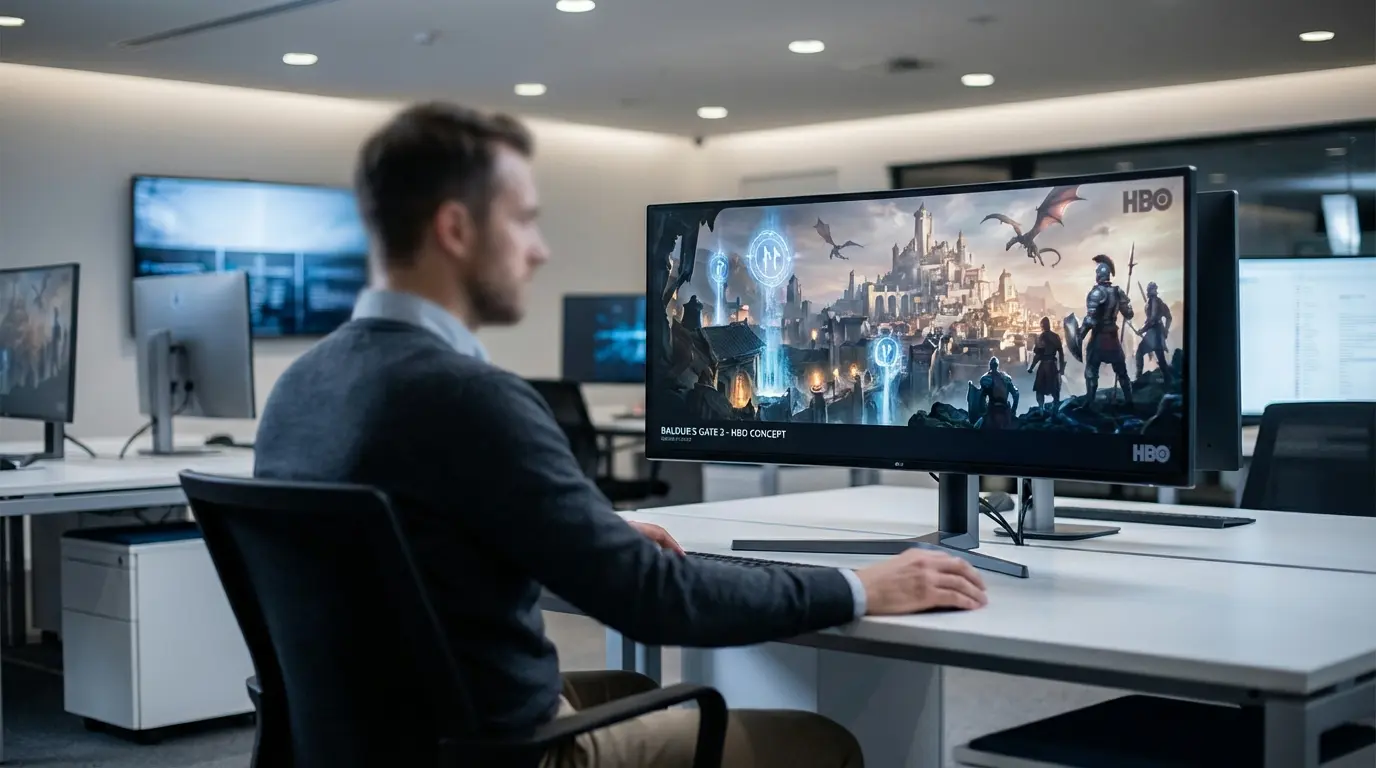
HBO is officially venturing into the Forgotten Realms. According to a new report from Deadline, the premium cable network is developing a TV series based on the massive role-playing game hit Baldur’s Gate. The project is being spearheaded by Craig Mazin, the acclaimed co-creator and showrunner of HBO’s The Last of Us adaptation, signaling a major commitment to the property.
Unlike many video game adaptations that seek to retell the events of the source material, this new series is reportedly being designed as a direct continuation of Larian Studios’ 2023 blockbuster, Baldur’s Gate 3. While the show is currently in the development phase, the involvement of Mazin—who successfully translated Naughty Dog’s post-apocalyptic narrative to television—suggests HBO is aiming for another high-prestige gaming adaptation.
Craig Mazin will serve as the series creator, writer, executive producer, and showrunner. His involvement is a significant draw given his track record with both The Last of Us and the Emmy-winning miniseries Chernobyl. According to reports, Mazin is a dedicated fan of the franchise, stating he has logged nearly 1,000 hours in Baldur’s Gate 3.
Joining Mazin in the production are key figures from Hasbro Entertainment, the parent company of Dungeons & Dragons publisher Wizards of the Coast. Executive producers include Jacqueline Lesko, Cecil O’Connor, and Hasbro Entertainment’s Gabriel Marano. Additionally, Chris Perkins, a veteran story designer for Dungeons & Dragons, will serve as a consultant to ensure lore accuracy.
The series is pitched not as a rehash of the game’s plot, but as a sequel set after the events of Baldur’s Gate 3. The narrative will reportedly focus on a new set of protagonists who are initially described as “not that powerful,” following the traditional Dungeons & Dragons progression where characters grow in strength over the course of their adventure.
While the focus will be on these new heroes, the show plans to integrate the wider world established by Larian Studios. Reports indicate that the series will feature returning characters from the game, allowing the show to explore the aftermath of the game’s story while avoiding the difficult task of canonizing one specific player-choice ending as the definitive version of events.
Will the Original Game Cast Reprise Their Roles?
Details regarding casting remain in the early stages, but the intent to include familiar faces is clear. Mazin has expressed plans to reach out to the cast members of Baldur’s Gate 3 with ideas for their participation. It is currently unclear if these actors would reprise their original roles in live-action or if they would be involved in other capacities.
Given the critical acclaim the game’s performance capture received—sweeping awards ceremonies for its acting—retaining the original talent would likely be a priority for maintaining continuity with the fanbase. However, no official casting contracts have been announced as of this writing.
Analysis: A Strategic Pivot for Fantasy Adaptations
By ByteWire Staff
HBO’s decision to position this series as a sequel rather than a direct adaptation is a clever narrative strategy. Baldur’s Gate 3 is defined by its branching narratives and player agency; adapting the main campaign directly would inevitably alienate players whose personal playthroughs diverged from the show’s script. By setting the story after the game, Mazin sidesteps the “canon” debate and opens the door to a fresh narrative that can stand on its own while still leveraging the rich world-building of the game.
Furthermore, this project fills a void left by Larian Studios, which has publicly stated it is moving away from the Baldur’s Gate IP to work on original projects. For fans hungry for more content in this specific iteration of the Forgotten Realms, this HBO series effectively becomes the only major official continuation of the BG3 timeline.
What This Means
For the entertainment industry, this solidifies the trend of high-budget video game adaptations replacing superhero films as the dominant source of new franchise IP. For HBO, it secures a fantasy successor that appeals to both the Game of Thrones audience and the massive gaming demographic. For fans of Dungeons & Dragons, it promises a high-fidelity live-action experience helmed by a creative team that has proven they understand how to respect source material while adapting it for a new medium.
Source: Original Article