For nearly a century, the lost 43 minutes of Orson Welles’ 1942 drama The Magnificent Ambersons has represented the absolute "holy grail" of lost cinema. When RKO Pictures seized control of the film, cut nearly an hour of footage, and destroyed the negatives to force a happier ending, Welles famously declared, "They destroyed Ambersons and it destroyed me." For decades, historians assumed those scenes were gone forever.
Now, in February 2026, the narrative is shifting. Fable, the AI startup behind the "Showrunner" platform, is attempting to reconstruct the missing footage using generative AI. But the most surprising development isn’t the technology itself—it is the shift in sentiment from the guardians of Welles’ legacy. After initially facing backlash for potential digital grave-robbing, the project has now secured the "cautious blessing" of the Welles estate, specifically his daughter Beatrice Welles, and the support of biographer Simon Callow.
This marks a pivotal moment where generative AI moves from being a disruptor of copyright to a potential tool for high-fidelity archival restoration. Here is how Fable is pulling it off and what it means for the future of film.
How is Fable using AI to restore lost footage?
Unlike previous attempts to restore the film, which relied on rough animation or static stills, Fable is aiming for a photorealistic recreation that blends seamlessly with the surviving 1942 footage. According to reports, the restoration process is a hybrid workflow rather than a simple text-to-video prompt.
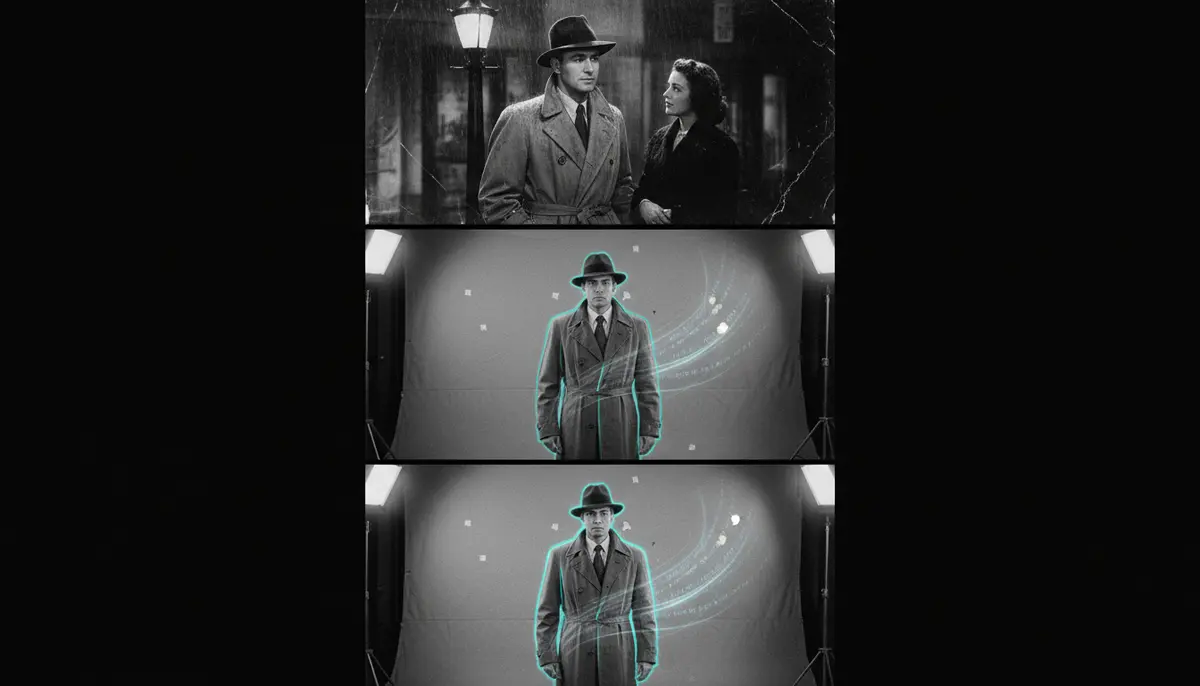
The team is combining AI-generated imagery with archival photographs and new live-action filming. To bridge the gap between modern actors and the original cast, they are utilizing AI face-swapping technology. This multi-layered approach allows for a level of continuity that pure generative video often struggles to maintain over long durations.
Crucially, Fable has brought on human expertise to guide the algorithms. Brian Rose, a filmmaker and Welles scholar who previously worked on an animated reconstruction of the film, is a key collaborator. This suggests a “human-in-the-loop” methodology where AI serves as the production engine rather than the sole creative director.
Why is this project happening if it is non-commercial?
One of the most immediate questions surrounding this project is the business model, given that Fable does not own the rights to The Magnificent Ambersons. As it stands, the project is strictly non-commercial. It cannot be sold to theaters or streaming services for profit.
However, for Fable and its CEO Edward Saatchi, the restoration serves as a high-profile proof of concept for their Showrunner platform. Saatchi has described Showrunner as the "Netflix of AI," a platform capable of generating high-quality long-form content. By tackling a project as complex and revered as Ambersons, Fable is demonstrating that its technology can handle narrative consistency, period-accurate details, and emotional resonance—hurdles that have historically plagued AI video generation.
This demonstration of capability is likely aimed at investors and future partners. It is worth noting that the Amazon Alexa Fund invested in Fable in mid-2025, signaling that big tech is closely watching the potential for AI-generated entertainment.
What are the ethical implications of completing a dead artist’s work?
The project initially drew sharp criticism when first announced in September 2025, with detractors arguing that using AI to complete a work of art fundamentally misunderstands what makes art meaningful. Critics worried that simulating Welles’ direction was a form of disrespect to a director who fought vehemently against studio interference during his lifetime.
However, the involvement of the estate has complicated that argument. With Beatrice Welles and Simon Callow now on board, the project has gained a veneer of legitimacy. It raises a difficult question for the industry: If the original artist’s heirs approve of an AI restoration, does that absolve the technology of its ethical baggage? While some critics maintain that recreating destroyed scenes is a fool’s errand, the shift in the estate’s stance suggests that AI may eventually be viewed as a valid tool for digital preservation, much like colorization or 4K remastering, albeit far more invasive.
The Bottom Line
Fable’s work on The Magnificent Ambersons is a masterclass in strategic positioning. By pivoting from a controversial tech experiment to an estate-sanctioned restoration, Fable has legitimized its "Showrunner" platform in a way that unauthorized South Park episodes never could. The winners here are the tech vendors, who now have a case study proving AI can handle "prestige" content, and potentially film historians who get a glimpse of a lost work.
However, the long-term implication is that the barrier between "restoring" old content and "creating" new content with dead actors is dissolving. Today it is a non-commercial restoration of a 1942 classic; tomorrow, the same technology will likely be pitched to studios to generate cheap sequels for dormant franchises without needing the original cast.