If you’ve been following the AI hardware space, you know the narrative has been dominated by one name: Nvidia. But what if the very versatility that makes Nvidia’s GPUs the industry standard is actually their biggest weakness when it comes to training modern AI?
That is the billion-dollar question being asked by MatX, a startup that just announced a massive $500 million Series B funding round. Founded by former Google engineers who helped build the TPU (Tensor Processing Unit) and PaLM software, MatX isn’t trying to build a better GPU. They are betting that the future of AI belongs to specialized silicon designed exclusively for Large Language Models (LLMs).
With a valuation now reaching "several billion dollars"—a massive leap from its previous $300 million tag—MatX has convinced some of the smartest money in tech that the window for a post-Nvidia architecture is wide open.
What makes the MatX One architecture different from a standard GPU?
To understand why investors like Jane Street and Situational Awareness are pouring half a billion dollars into this company, you have to look at the architecture. Current GPUs are general-purpose beasts; they are designed to handle everything from rendering video game graphics to scientific simulations.
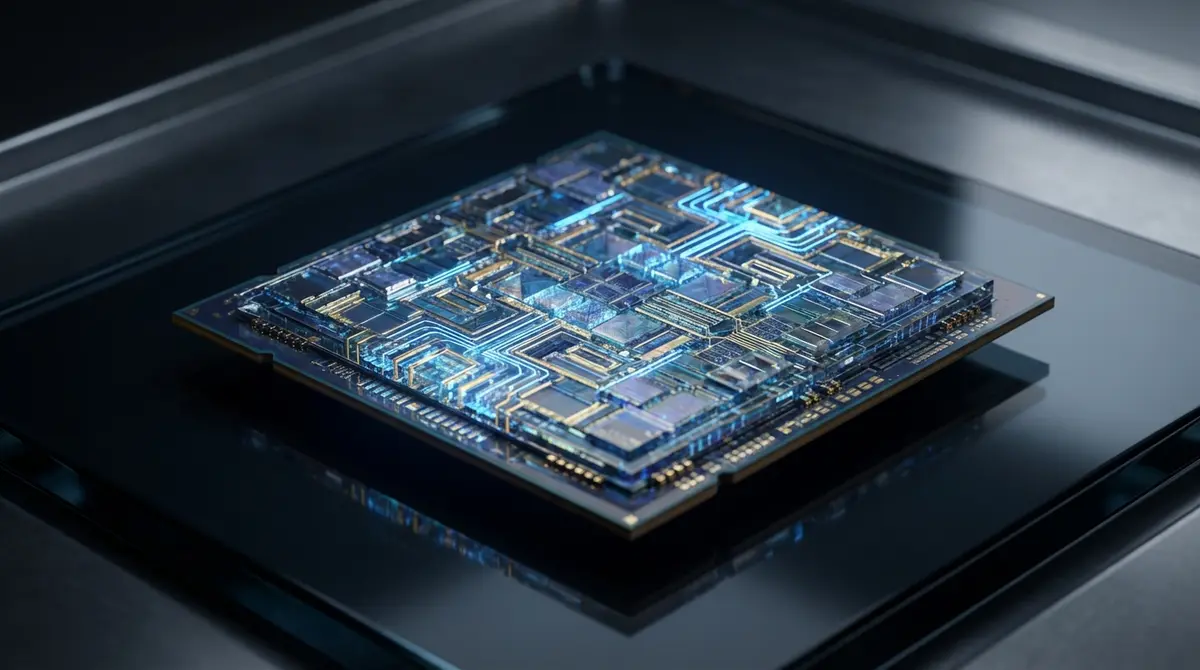
MatX argues that for LLMs, this versatility is just bloat. Their flagship product, the "MatX One," takes a radically different approach. Instead of using many small processing cores like a traditional GPU, MatX utilizes a single large processing core known as a "splittable systolic array."
This design is hyper-optimized for matrix multiplication, the mathematical operation that underpins virtually all modern AI. By stripping away non-essential components and focusing on an SRAM-first design combined with High Bandwidth Memory (HBM), MatX claims they can deliver 10x better performance per dollar for both training and inference compared to Nvidia.
According to CEO Reiner Pope, this allows them to solve a persistent trade-off in chip design. "Our position is that it is actually possible to do both [low latency and long context] in the same product and you get a much better product as a result," Pope stated regarding their approach.
Who is backing this ambitious hardware roadmap?
Building chips is notoriously capital-intensive, which is why this $500 million raise is critical. The round was led by quantitative trading firm Jane Street and the investment firm Situational Awareness, run by Leopold Aschenbrenner. It also includes strategic backing from manufacturing partners Alchip and Marvell Technology.
Perhaps even more interesting is the list of angel investors, which reads like a Who’s Who of the AI elite, including former Tesla AI chief Andrej Karpathy and the Collison brothers of Stripe. This suggests that the people building the software layer see a genuine need for the hardware MatX is proposing.
The funding does more than just keep the lights on; it secures a seat at the manufacturing table. CTO Mike Gunter noted the significance of the war chest, saying, "This round puts us almost on the same footing as the players who have a huge amount of money [to reserve manufacturing capacity]."
When can we expect to see MatX chips in data centers?
While the specs are impressive on paper, hardware is hard, and timelines are long. MatX plans to "tape out" (finalize the design for manufacturing) the chip in 2026, with shipments to customers expected to begin in 2027.
The chips will be manufactured by TSMC, the same foundry that produces silicon for Apple and Nvidia. This timeline puts MatX on a collision course with the evolving market. Reports indicate that companies like Meta are already signing long-term infrastructure agreements with AMD, highlighting a desperate market hunger for alternatives to Nvidia’s ecosystem.
With Nvidia set to report its Q4 fiscal 2026 earnings on February 25, the industry will soon get a fresh benchmark for AI infrastructure demand. MatX is betting that by the time their chips arrive in 2027, the market will be ready to move away from general-purpose GPUs toward specialized, cost-efficient engines.
Why It Matters
This is a pivotal moment because it challenges the assumption that the GPU is the final form of AI compute. If MatX delivers on its 10x performance-per-dollar promise, it fundamentally changes the economics for frontier AI labs, allowing them to train larger models for a fraction of the current cost. However, the risk is timing; 2027 is a lifetime away in AI development. If the dominant model architecture shifts away from transformers before MatX ships, their specialized chip could be obsolete on arrival. But if LLMs remain king, MatX could be the efficiency engine the industry is desperate for.
![Illustration related to MatX Raises $500M: The Anti-Nvidia Chip [Analysis]](https://bytewire.press/wp-content/uploads/bytewire-images/2026/02/matx-raises-500m-nvidia-challenger-8621889ea3.webp)
![Diagram related to MatX Raises $500M: The Anti-Nvidia Chip [Analysis]](https://bytewire.press/wp-content/uploads/bytewire-images/2026/02/matx-raises-500m-nvidia-challenger-30f5aab5c3.webp)