New York lawmakers have introduced legislation to impose a three-year moratorium on new large-scale data centers, signaling a major escalation in the conflict between the booming artificial intelligence sector and environmental sustainability. The bill, S.9144, sponsored by State Senator Liz Krueger and Assemblymember Anna Kelles, seeks to halt the construction of facilities exceeding 20 megawatts (MW) to allow time for a comprehensive environmental review.
This legislative move comes as the demand for computational power—driven primarily by generative AI—surges, threatening to overwhelm local power grids. If passed, New York would become the most significant battleground yet in a growing national trend where states are reconsidering their open-door policies toward tech infrastructure.
Why is New York proposing a ban on new data centers?
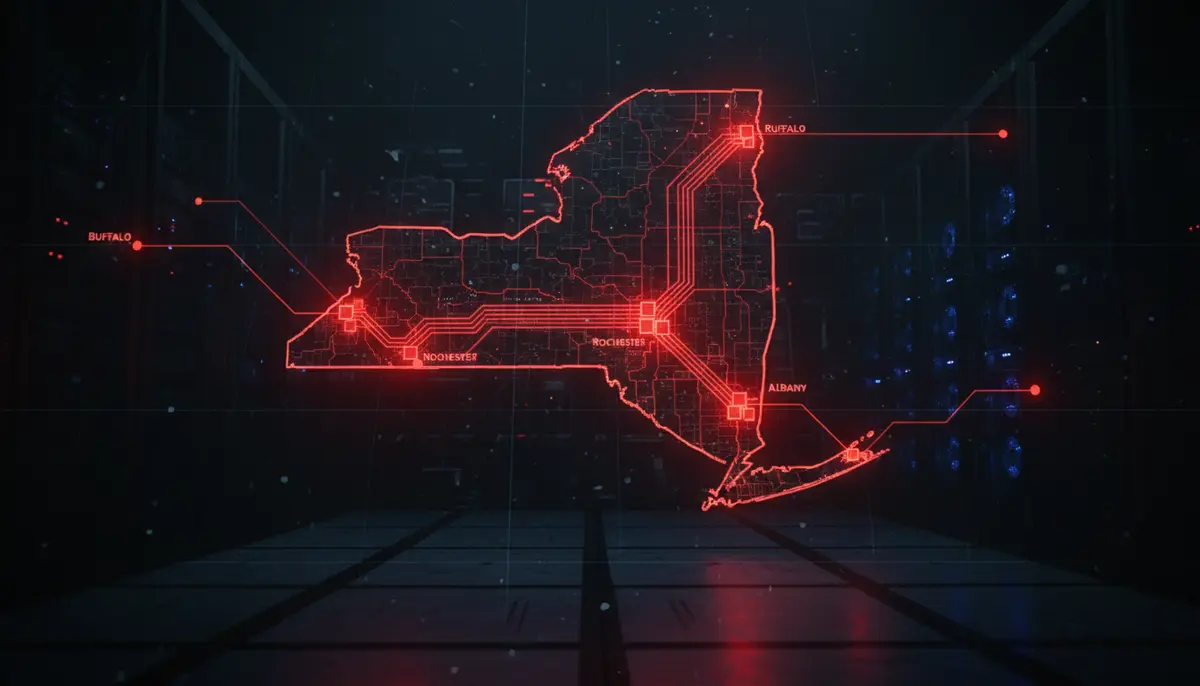
The primary driver behind Bill S.9144 is the staggering projection of energy consumption required to support the next generation of digital infrastructure. According to research findings, data center electricity usage in New York is projected to increase by over 9,000 MW. To put that figure in perspective, it is roughly double the current electricity usage of all New York households combined.
Senator Krueger has framed the legislation as a necessary intervention to prevent irreversible strain on the state’s resources. "It’s time to hit the pause button, give ourselves some breathing room to adopt strong policies on data centers, and avoid getting caught in a bubble that will burst," Krueger stated. The proposed pause is designed to give the Department of Environmental Conservation time to complete a full environmental impact statement, assessing the long-term effects on energy reliability, water usage for cooling systems, and air quality.
Assemblymember Anna Kelles echoed these concerns, arguing that the current trajectory is unsustainable. "Data Centers are straining our energy grid, polluting our environment, and abusing our resources without any regulations or oversight," she said.
How does S.9144 differ from past crypto regulations?
This is not New York’s first attempt to curb the energy appetite of the tech industry, but it is arguably the most sweeping. In 2022, the state enacted a moratorium specifically targeting cryptocurrency mining operations that utilized fossil fuels. That legislation was narrow in scope, focusing on the reactivation of old power plants for proof-of-work mining.
The current proposal is far broader. It targets the infrastructure underpinning the entire generative AI economy. Unlike crypto mining, which can be geographically agnostic, AI data centers require proximity to major fiber backbones and reliable power sources, often clustering them in specific regions. By setting the threshold at 20 MW, the bill specifically targets the "hyperscalers"—tech giants like Microsoft, Google, Amazon, and Meta—that are racing to build massive facilities to train and deploy large language models.
Eric Weltman of Food & Water Watch, an environmental group supporting the ban, has called S.9144 the "strongest data center moratorium bill in the country," highlighting the shift from niche crypto regulation to broad industrial oversight.
Are other states following New York’s lead?
New York is not acting in a vacuum. The state joins a growing list of jurisdictions experiencing what analysts describe as "buyer’s remorse." For years, states offered generous tax incentives to attract tech investment, only to find that data centers provide relatively few permanent jobs while placing immense pressure on utility grids.
According to recent reports, at least five other states are considering similar pauses or tighter regulations:
Georgia: Lawmakers introduced HB 1012 in January 2026, the first statewide data center moratorium bill of the year.
Oklahoma and Virginia: Both states are reviewing legislation (SB 1488 and HB 1515, respectively) to manage the explosive growth of server farms.
Maryland and Vermont: Are actively exploring regulatory frameworks to mitigate grid instability.
This legislative wave is fueled by rising costs for consumers. Nationally, electricity rates rose by 13% in 2025, and proponents of these moratoriums argue that residents should not bear the cost of grid upgrades required by trillion-dollar tech companies.
ByteWire Analysis
The introduction of S.9144 highlights a critical pivot in the relationship between government and big tech. For the past decade, data centers were viewed as trophies of economic development. Now, they are increasingly viewed as parasitic loads on the energy grid. This shift is particularly acute in New York, where ambitious climate goals clash directly with the energy realities of AI.
However, a moratorium carries economic risks. If New York closes its doors, hyperscalers may simply accelerate investment in states with looser regulations, creating a fragmented regulatory landscape. Furthermore, this could push tech companies to bypass the public grid entirely, seeking "behind-the-meter" deals directly with nuclear or renewable power plants—a trend already emerging in other markets. While this insulates the public grid, it essentially privatizes clean energy assets that might otherwise serve the public.
What This Means
If passed, the three-year pause would force a significant recalibration of AI infrastructure rollout in the Northeast. Hyperscalers would likely divert billions in capital investment to neighboring states or regions willing to accept the environmental trade-offs.
For the tech industry, this represents a physical bottleneck that code cannot solve. The era of unrestricted access to power and water is ending. Companies will likely need to invest more heavily in efficiency technologies or contribute directly to grid modernization to win over skeptical lawmakers. As Governor Kathy Hochul noted in her 2026 State of the State address, the impact of data centers is now a top-tier policy issue, suggesting that even if this specific bill does not pass, the regulatory environment is permanently changing.