Ever wonder what is actually holding up the global supply of AI chips? You might picture massive semiconductor fabs struggling to print silicon wafers, but the reality is much more surprising. The entire generative AI industry is currently bottlenecked by a single, highly specialized ingredient you have probably never heard of: glass.
Specifically, a specialized glass-fiber cloth known as T-glass. And right now, roughly 90% of the global supply of this crucial material is controlled by just one Japanese company called Nittobo, also known as Nitto Boseki. Let’s dive into why this obscure material is causing a massive structural choke point in the global tech supply chain.
What is T-glass and why do AI chips need it?
To understand the shortage, we first need to look at what T-glass actually does. Advanced AI accelerators—the heavy-duty chips powering today’s generative AI models—generate a massive amount of heat and require flawless, high-speed signal integrity.
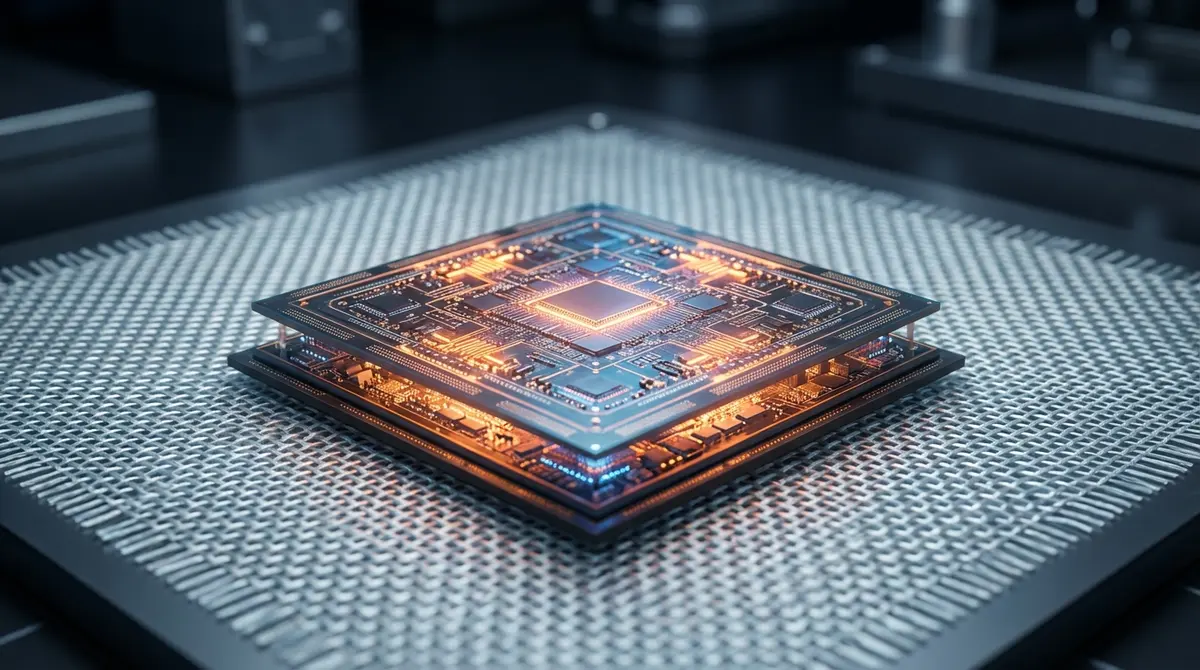
This is where T-glass steps in. It is a specialized, low-dielectric glass fiber cloth embedded directly into advanced chip substrates and multi-layer printed circuit boards. It boasts a low-coefficient-of-thermal-expansion, which is a highly technical way of saying it prevents the chip substrate from warping when things get incredibly hot. Without T-glass, these expensive AI processors would literally warp and fail under their own intense thermal stress.
The demand multiplier for this material is staggering. According to supply chain research, a single AI server requires five to eight times more high-end glass fiber cloth than a traditional server.
Why is there a global shortage of T-glass?
Historically, material suppliers have taken a highly conservative approach to expanding their manufacturing capacity. Nobody wants to build a billion-dollar factory for a tech trend that might fizzle out. But the explosive, overnight growth of generative AI caught everyone completely off guard.
The sudden spike in demand has created a severe supply-demand imbalance across the industry. In fact, according to Nittobo’s own Integrated Report 2025, current market demand is running roughly two to three times higher than what the company projected when formulating its medium-term management plan. Because of this frantic scramble for essential materials, the price of top-tier T-Glass has skyrocketed to historic highs, currently sitting between $80 and $100 per kilogram.
How are Apple, Qualcomm, and NVIDIA responding to the supply crisis?
When a critical material runs short, the biggest players in the technology sector do not just sit back and wait in line. They get aggressive.
According to reports, tech giants like Apple and Qualcomm—who have been among the first to flag concerns over these constrained supplies—have actually stationed their own personnel directly at key Japanese suppliers. Their goal is to desperately secure allocations of glass cloth to ensure their upcoming consumer devices and processing units do not face devastating delays.
Meanwhile, alternative suppliers are racing to capture a slice of this highly lucrative market. Competitors like Taiwan Glass are actively retrofitting their existing production lines. They are currently undergoing rigorous qualification processes with major chipmakers like NVIDIA and AMD, hoping to capitalize on Nittobo’s massive supply shortfall.
When will the T-glass shortage end?
If you are hoping for a quick resolution to this supply chain headache, you are going to be severely disappointed. Nittobo is currently pouring 15 billion yen into its Fukushima plant to triple its T-glass production capacity.
However, building and qualifying advanced manufacturing lines takes a significant amount of time. This new production capacity is not expected to come online until late 2026 or 2027. Because of this incredibly long lead time, one materials executive recently described the T-glass shortage as one of the biggest bottlenecks facing the electronics manufacturing and artificial intelligence industries in 2026. Until those new Fukushima factory lines are fully operational, the shortage will continue to extend lead times for IC substrates and drive up material costs across the board.
The Real Story
The true bottleneck of the AI revolution isn’t silicon computing power; it is the unglamorous, foundational materials science that holds that silicon together. As Nittobo struggles to triple its output, the undisputed winners here will be secondary suppliers like Taiwan Glass, who now have a rare and highly lucrative opportunity to break Nittobo’s 90% market monopoly. Conversely, smaller AI hardware startups will be the biggest losers, as they simply lack the capital and leverage to outbid tech titans like Apple and Qualcomm for tightly constrained T-glass allocations. Ultimately, this structural deficit proves that the pace of AI advancement over the next three years will be dictated not by software engineers in Silicon Valley, but by glass fabric weavers in Fukushima.
![Illustration related to T-Glass AI Chip Shortage: Nittobo's 90% Monopoly [Analysis]](https://bytewire.press/wp-content/uploads/bytewire-images/2026/03/nittobo-t-glass-ai-chip-shortage-967f067f3a.webp)
![Diagram related to T-Glass AI Chip Shortage: Nittobo's 90% Monopoly [Analysis]](https://bytewire.press/wp-content/uploads/bytewire-images/2026/03/nittobo-t-glass-ai-chip-shortage-884f1bf268.webp)