Have you noticed how brutal the space industry has become lately? It feels like just yesterday we were talking about a booming European startup scene ready to take on the giants. But the reality of physics and finance is catching up fast. While we watched China execute a textbook booster landing this week, one of the UK’s most promising rocket companies, Orbex, quietly filed for administration. It’s a stark reminder of just how high the stakes are when you’re trying to defy gravity on a budget.
The news broke in early February 2026, signaling a significant contraction in the European launch market. At the same time, half a world away, China demonstrated it is rapidly mastering the very technology—reusability—that made SpaceX the king of the hill.
What went wrong for the UK’s leading rocket hopeful?
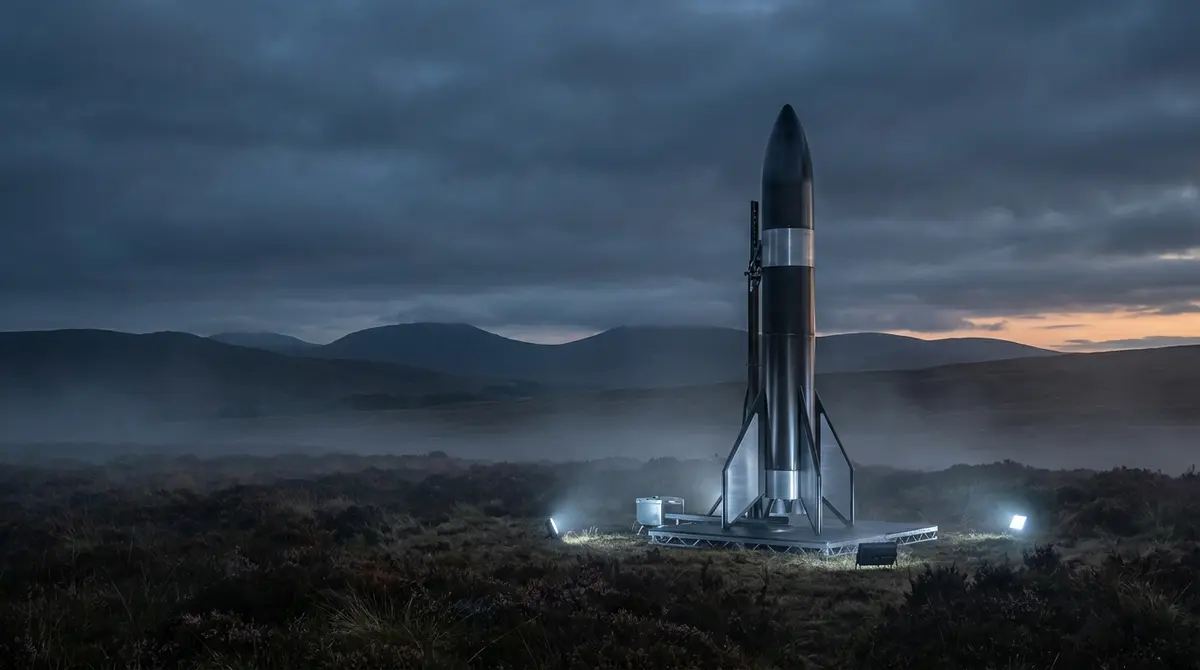
If you were following the European space race, you probably had your eyes on Orbex. Based in the UK, they were developing the ‘Prime’ rocket, a vehicle designed to run on bio-propane. But building rockets is incredibly capital-intensive, and the transition from R&D to actual flight operations is often called the “valley of death” for good reason. Orbex unfortunately didn’t make it across.
According to reports, the company filed for administration—insolvency—in February 2026. This wasn’t a sudden decision; it followed a desperate scramble for cash. The company had been trying to secure Series D funding or find a buyer. Late in January 2026, it looked like there might be a lifeline: a planned acquisition by the European cargo startup ‘The Exploration Company,’ led by Hélène Huby. However, that deal fell through, leaving Orbex without a parachute.
The fallout has been immediate. Orbex’s Danish subsidiary, which was responsible for manufacturing the engines, has already declared bankruptcy. Now, roughly 150 jobs in the UK are at risk. CEO Phil Chambers didn’t mince words about the emotional toll, stating, “Disappointing doesn’t come close to describing how we feel about this moment.”
Who might pick up the pieces of the Sutherland Spaceport?
Whenever a major player falls, the vultures—or in this case, the competitors—start circling. The collapse of Orbex leaves a void, particularly regarding the Sutherland Spaceport in Scotland, for which Orbex held the lease. It turns out, rival UK firm Skyrora is watching closely.
Skyrora, led by Volodymyr Levykin, has expressed interest in acquiring Orbex’s assets. Reports suggest they are looking at a deal worth approximately £10 million, which would include the spaceport lease. This potential consolidation highlights how crowded the small launch vehicle market has become. With too many companies fighting for too few scraps, mergers and asset seizures are becoming the new normal.
How is China closing the gap on reusable rockets?
While Europe is seeing a contraction, China is accelerating. The China Manned Space Agency (CMSA) recently celebrated a massive win. They successfully conducted a vertical takeoff and landing (VTVL) test of the Long March 10 rocket’s first stage. If you’ve seen those iconic videos of Falcon 9 boosters landing on drone ships, you know exactly what this looks like.
This wasn’t just a hop; it was a controlled splashdown that also validated the launch abort system for the ‘Mengzhou’ crew spacecraft. The CMSA described the test as a “significant breakthrough.” Why is this a big deal? Because the Long March 10 is the heavy-lifter intended to carry Chinese taikonauts to the Moon. This test brings China one step closer to its goal of a manned lunar landing by 2030.
China isn’t just relying on one state vehicle, either. Commercial Chinese firms like LandSpace and Deep Blue Aerospace are hot on the heels of the national program. LandSpace is prepping for a second recovery test of its Zhuque-3 rocket in mid-2026, and Deep Blue is advancing tests for its Nebula-1. The ecosystem there is thriving, driven by a strategic national push to match American capabilities.
Is the small launch market officially overcrowded?
The tale of Orbex and China highlights a brutal economic truth about modern spaceflight: price is everything. The small launch vehicle market is facing intense pressure because SpaceX’s Transporter rideshare missions offer significantly lower prices than dedicated small rockets can usually match. As Ars Technica’s Eric Berger noted regarding the industry landscape, “You absolutely have to have a plan to compete with SpaceX on price.”
Orbex struggled to raise the funds needed to compete in this environment. Meanwhile, China is bypassing the small-launcher trap by focusing heavily on heavy-lift reusability from the start, aiming to challenge US hegemony directly rather than fighting for scraps in the small-sat market.
Why It Matters
The insolvency of Orbex is more than just a business failure; it represents a serious blow to European sovereignty in space access. While Europe struggles with funding fragmentation and failed mergers, China is successfully executing a state-directed strategy to clone and eventually challenge SpaceX’s infrastructure. The market is bifurcating: on one side, massive, reusable heavy-lift networks (US and China), and on the other, a graveyard of small launch startups that couldn’t survive the capital crunch. Europe must now decide if it will consolidate its resources into fewer, stronger champions or continue to watch its startups flicker out one by one.
![Illustration related to Orbex Administration vs China Long March 10 [Analysis]](https://bytewire.press/wp-content/uploads/bytewire-images/2026/02/orbex-insolvency-china-long-march-10-vtvl-test-ad3b10d09a.webp)
![Diagram related to Orbex Administration vs China Long March 10 [Analysis]](https://bytewire.press/wp-content/uploads/bytewire-images/2026/02/orbex-insolvency-china-long-march-10-vtvl-test-e268688a91.webp)