Google has officially initiated the rollout of Pixel Camera version 10.3, marking its first software update to the core photography application in 2026. While categorized by the company as a minor release, this update introduces highly specific refinements to the camera ecosystem that directly impact flagship functionalities. The primary user-facing alterations include a strategic rebranding of the extreme 100x zoom capability on the Pixel 10 Pro series, alongside a substantial expansion of external hardware interoperability through the ‘Connected Cameras’ interface.
What Prompted Google to Rename Pro Res Zoom to Pro Zoom?
The most visible modification in the Pixel Camera 10.3 package is the rebranding of the ‘Pro Res Zoom’ feature, which has been officially streamlined to simply ‘Pro Zoom’ exclusively on the Pixel 10 Pro and Pixel 10 Pro XL devices. To understand this semantic shift, it is necessary to examine the underlying architecture of the tool itself.
Introduced alongside the Pixel 10 Pro series, this magnification feature leverages the proprietary Tensor G5 processor. The system utilizes sophisticated generative AI diffusion models to synthesize missing details, enabling an effective 100x zoom capability. This computational approach fundamentally differs from traditional digital cropping or standard telephoto optics. By utilizing AI to intelligently fill in missing pixels and recreate distant subjects, Google effectively built a bridge between standard smartphone telephoto hardware and extreme visual magnification.
However, this methodology has sparked ongoing industry debate regarding the heavy reliance on artificial intelligence to generate image data that the physical optical lens cannot natively capture. Building upon the legacy of Google’s earlier ‘Super Res Zoom’, the new 100x implementation pushed the boundaries of computational photography. The transition from ‘Pro Res Zoom’ to ‘Pro Zoom’ simplifies the consumer branding while drawing a clearer technical distinction. It subtly removes the implication of true optical resolution, positioning the feature as a professional-grade AI enhancement rather than a traditional optical capture.
How Does the Expanded Connected Cameras Feature Work?
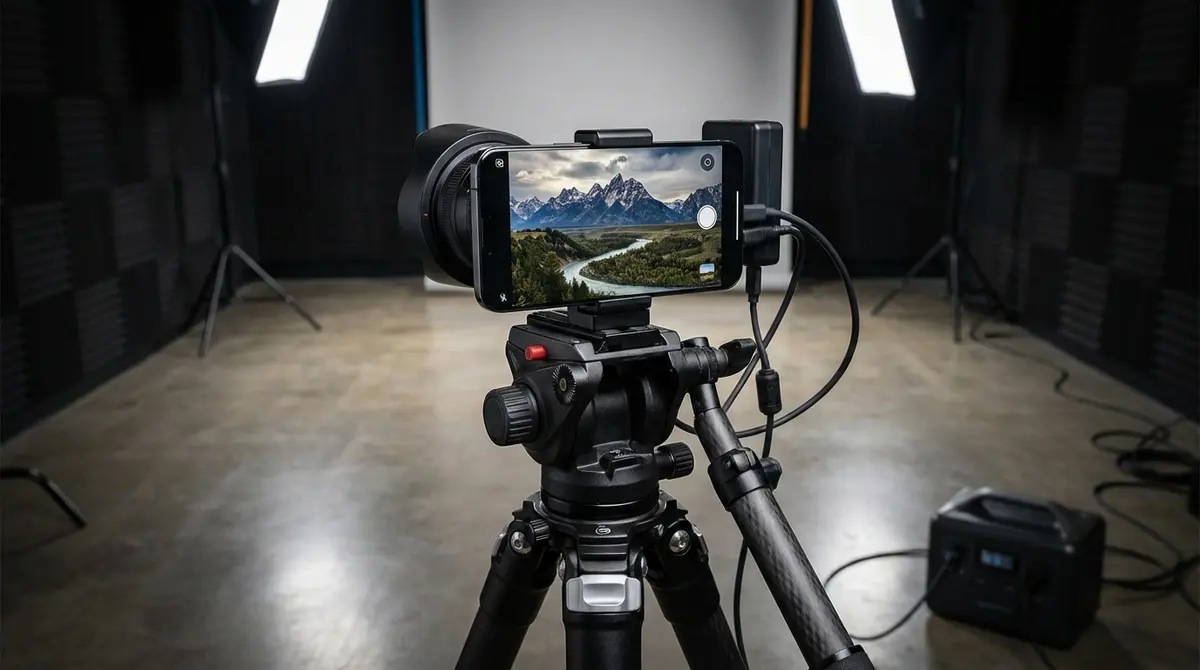
In addition to this branding adjustment, the Pixel Camera 10.3 update significantly broadens the utility and scope of the ‘Connected Cameras’ framework. According to reports, the feature now permits compatible Pixel smartphones to interface directly with a much wider array of external optical hardware via a wired USB connection.
Supported external devices now explicitly include standalone webcams, professional DSLR cameras, and even other Pixel smartphone cameras. This creates a versatile hardware network where the smartphone can act as the primary viewfinder or processing node. Furthermore, this functionality is not restricted exclusively to the latest flagship hardware. Google has engineered backward compatibility for this feature, allowing it to operate seamlessly on the Pixel 6 and all subsequent newer devices.
For content creators, streamers, and professional videographers, this integration is a highly practical enhancement. It effectively transforms the Pixel device into a versatile external monitor or a centralized processing hub for superior optical equipment, streamlining mobile production workflows without requiring third-party capture card applications.
Which Devices Receive the Pixel Camera 10.3 Update First?
Regarding the deployment pipeline, Google has opted for a staggered release architecture for this specific software version. The Pixel Camera 10.3 update was initially provisioned exclusively for the newly released Pixel 10a hardware, ensuring early adopters of the mid-range device had access to the latest interface refinements. Following this localized debut, the software package is now actively rolling out to the broader compatible Pixel ecosystem via the Google Play Store.
Concurrently, it is worth noting the adjacent system-level improvements. Google recently deployed the Android 16 QPR3 March 2026 system update to supported devices. While technically separate from the Pixel Camera application update, this system-level patch directly benefits the overall photographic experience. The QPR3 update resolved a documented stability issue that previously caused the camera service to crash specifically on Pixel 9+ devices. Together, these concurrent software rollouts represent a stabilized, highly refined imaging environment for Google’s current and previous hardware generations.
Between the Lines
The decision to drop “Res” from the 100x zoom feature is a calculated concession to photography purists; it subtly acknowledges that AI diffusion models generate new pixels rather than resolving existing optical data. This semantic pivot protects Google from lingering criticisms regarding photographic authenticity while maintaining the feature’s premium positioning. Meanwhile, expanding wired DSLR and webcam support back to the Pixel 6 is a massive, under-the-radar victory for hardware longevity, effectively turning aging smartphones into high-utility field monitors for professional creators. Ultimately, this minor update does more to mature Google’s camera ecosystem than many full-version overhauls, bridging the gap between computational parlor tricks and practical, pro-level utility.
![Illustration related to Pixel Camera 10.3 Pro Zoom & DSLR Support [Full Details]](https://bytewire.press/wp-content/uploads/bytewire-images/2026/03/pixel-camera-10-3-pro-zoom-dslr-support-93e5ae65a2.webp)
![Diagram related to Pixel Camera 10.3 Pro Zoom & DSLR Support [Full Details]](https://bytewire.press/wp-content/uploads/bytewire-images/2026/03/pixel-camera-10-3-pro-zoom-dslr-support-0531ae9db5.webp)