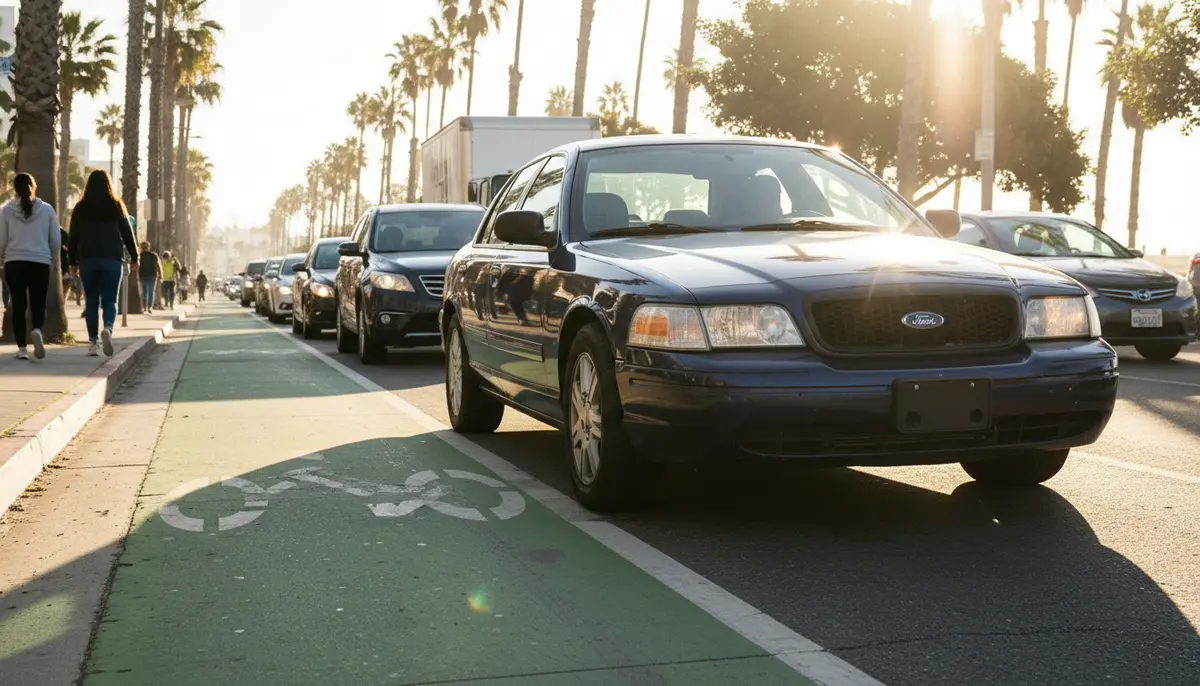
If you have ever ridden a bicycle in a busy city, you know the specific shot of adrenaline that hits when a bike lane suddenly disappears beneath the wheels of a parked delivery truck or an idling sedan. You are forced to check your shoulder, pray, and swerve into active vehicle traffic. It is a dangerous maneuver that cities call a “Vision Zero” priority to eliminate, but enforcement has always been a game of whack-a-mole.
Santa Monica is looking to change those odds with technology. The coastal California city is significantly upgrading its automated enforcement capabilities, moving beyond just bus-mounted cameras to deploy Hayden AI’s vision technology on standard parking enforcement vehicles. This move marks a pivotal shift in how municipalities police public rights-of-way, effectively automating the hunt for bike lane blockers citywide.
How does Santa Monica’s new AI enforcement actually work?
Until now, automated enforcement in Santa Monica was largely the domain of the “ABLE” (Automated Bus Lane Enforcement) program. Launched on Big Blue Bus vehicles in 2025, that system used cameras mounted on transit buses to snap photos of cars blocking bus lanes. It was effective, but it had a major blind spot: it could only enforce the law along specific bus routes.
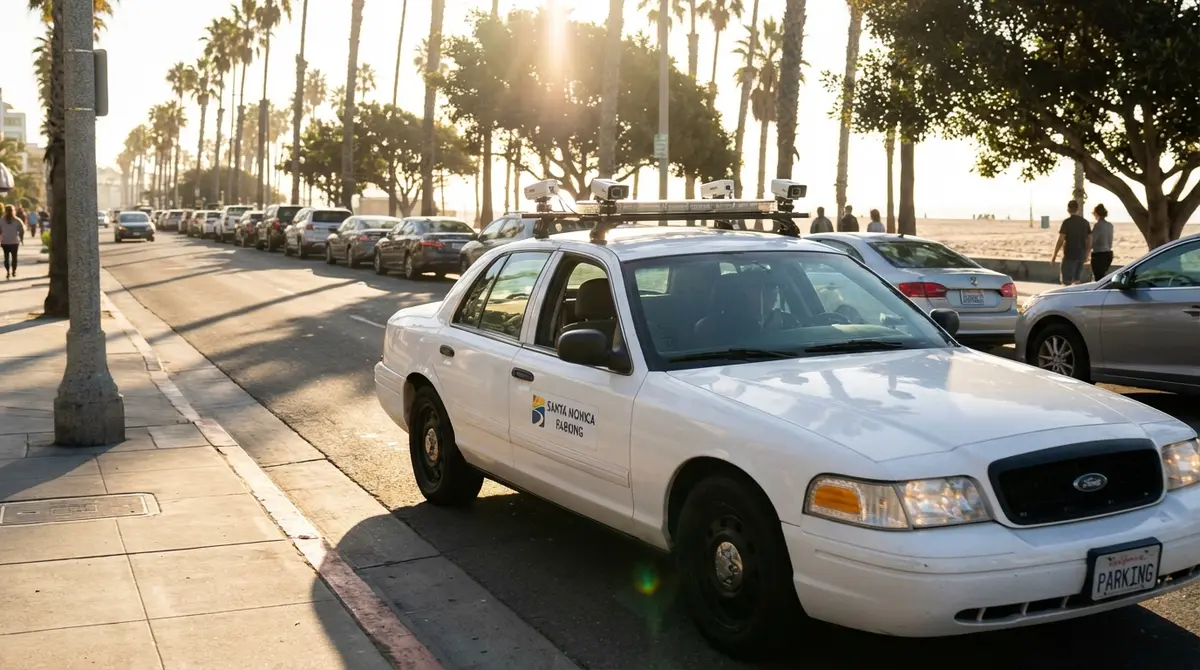
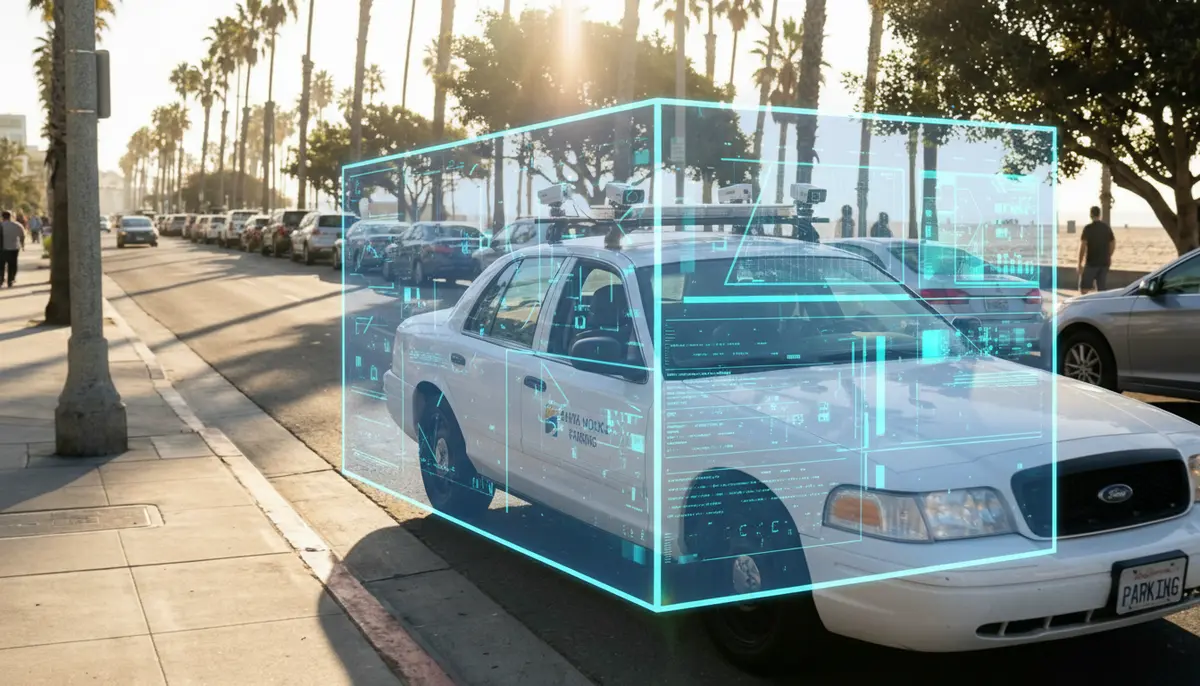
This new initiative changes the geometry of enforcement. According to city documents, Santa Monica is installing Hayden AI’s vision platform on seven dedicated city parking enforcement vehicles. These are standard sedans or utility vehicles that roam the entire city, not just transit corridors.
The system works by scanning the street as the enforcement officer drives. When the AI detects a vehicle illegally parked in a bike lane, it captures the evidence necessary to issue a citation. This is authorized under California Assembly Bill 361, which specifically permits camera-based enforcement for parking violations in bike lanes. By decoupling the cameras from the bus network, the Santa Monica Department of Transportation (DOT) can now monitor and protect bike lanes on residential streets and commercial areas that a Big Blue Bus might never visit.
Is the technology actually effective at catching violators?
Before committing to a full rollout, the city ran a pilot program that generated numbers difficult to ignore. In a successful 2024 test, just two vehicles equipped with the technology detected 1,679 violations in a mere six weeks.
Anuj Gupta, the Director of the Santa Monica DOT, noted that the sheer volume of violations detected underscores the “urgent need” for programs like this. For cyclists, those 1,679 violations represent nearly two thousand instances where a rider might have been forced into traffic. By automating the detection, the city removes the need for an officer to manually spot, stop, and write a ticket for every single infraction—a process that is often too slow to catch “quick stops” that still endanger cyclists.
What does this cost the city and the drivers?
Efficiency comes with a price tag, both for the municipality and the violators. In January 2026, the Santa Monica City Council approved a $944,000 contract expansion with Hayden AI to fund this rollout. While nearly a million dollars is a significant line item, the revenue model suggests it could be self-sustaining given the volume of potential fines.
For drivers caught by the roving cameras, the penalty is steep. Violators face fines of roughly $293. This figure is consistent with the penalties already in place for the city’s automated bus lane enforcement. The alignment of fines suggests the city views blocking a bike lane as equivalent in severity to blocking mass transit—a stance that reinforces their commitment to the Vision Zero strategy aimed at eliminating traffic fatalities.
Why is this a major shift for automated enforcement technology?
From a tech industry perspective, this deal represents a significant graduation for Hayden AI. The company has made waves implementing its systems in major metropolises like New York, Washington D.C., and Oakland, but those deployments primarily focused on transit zones.
Marty Beard, the CEO of Hayden AI, highlighted that this is the first time their technology is being used on dedicated parking enforcement vehicles rather than transit buses. This validates that the mobile perception technology works effectively on standard passenger vehicles, not just heavy-duty buses. This opens up a massive new market: cities that may not have extensive bus networks can still deploy automated enforcement fleets using existing municipal cars.
The Bigger Picture
This deployment signals the end of “safety through obscurity” for drivers who treat bike lanes as temporary loading zones. By moving enforcement cameras from fixed bus routes to roving patrol cars, Santa Monica has effectively digitized the entire city grid, creating a surveillance environment where violation detection is constant rather than sporadic. While privacy advocates may chafe at the expansion of mobile surveillance, the data suggests that manual enforcement is simply incapable of keeping pace with the volume of infractions that endanger cyclists daily. Ultimately, this shifts the burden of safety from the vulnerable road user to the wallet of the violator, a necessary economic lever when physical infrastructure barriers aren’t present.