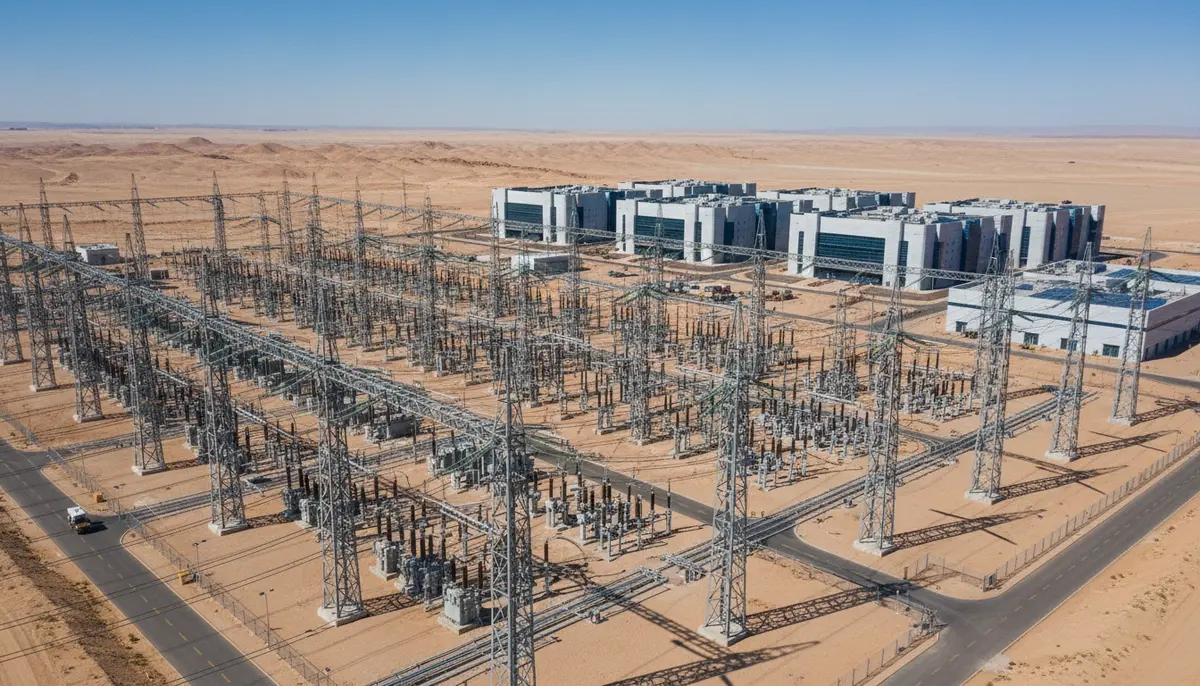
The era of software eating the world has officially ended. We are now entering the era where software eats the power grid. As of early 2026, the capital expenditure narrative for Big Tech has fundamentally decoupled from traditional software economics, shifting toward a projected $3-4 trillion infrastructure build-out by 2030. The latest wave of disclosures reveals that the primary driver of enterprise value is no longer just algorithm efficiency, but the raw ownership of power generation and sovereign-scale compute clusters.
This shift is best exemplified by the sheer magnitude of recent contracts. We are seeing a transition where technology giants are effectively becoming utility operators, necessitated by energy demands that have outstripped public grid capacity. From the colossal ‘Stargate’ project to Meta’s half-trillion-dollar pledge, the numbers suggest a total industrial retooling of the American compute landscape.
How much are tech giants actually spending on AI infrastructure?
The figures pledged in late 2025 and early 2026 are staggering, rivaling the GDP of mid-sized nations. Leading the charge in sheer volume is Meta. In a candid moment with President Trump, CEO Mark Zuckerberg confirmed a commitment of over $600 billion in U.S. infrastructure spending through 2028. For the fiscal year 2025 alone, Meta allocated between $66 billion and $72 billion to secure its position in the hardware arms race.
Google is following a similar, albeit slightly more conservative, trajectory. The company is investing over $75 billion in 2025 on AI infrastructure. A significant portion of this capital—$40 billion—is earmarked specifically for a three-data-center project in Texas through 2027, signaling the state’s emergence as a critical hub for AI logistics.
However, the most complex financial architecture surrounds the ‘Stargate’ initiative. Originally rumored as a $100 billion concept in 2024, the project has metastasized into a $500 billion joint venture involving OpenAI, Oracle, and SoftBank. The cornerstone of this initiative is a $300 billion, 5-year cloud computing contract signed between OpenAI and Oracle in late 2025. This deal underscores the reality that access to compute is now the single most expensive line item for frontier model development.
Why is the ‘Stargate’ project reshaping the industry?
The ‘Stargate’ project represents a shift from renting capacity to building independent industrial grids. According to Oracle, the partnership with OpenAI has evolved into a concrete plan to develop 4.5 gigawatts of additional data center capacity in the United States. Major construction is already underway in Abilene, Texas, transforming the region into a central node for the next generation of AI training.
This project was born out of necessity. The energy demands of next-generation models overwhelmed existing public grid capacity, forcing a “sovereign cloud” approach. To facilitate the massive capital influx required for such a project, OpenAI underwent a significant corporate restructuring in October 2025, transitioning to a Public Benefit Corporation (PBC). This move effectively removed profit caps for investors, allowing partners like Microsoft and SoftBank to pour tens of billions into the physical infrastructure required to sustain the project.
What does the ‘Rate Payer Protection Pledge’ mean for energy costs?
The uncontrolled growth of AI power consumption has inevitably drawn regulatory scrutiny. In his 2026 State of the Union address, President Trump announced the “Rate Payer Protection Pledge.” This policy introduces a hard regulatory ceiling, mandating that major tech companies must build or buy their own power plants to prevent their demand from spiking consumer electricity prices.
The pledge, scheduled to be signed by Amazon, Google, Meta, and others at the White House in March 2026, forces these companies to internalize their energy costs. As President Trump stated, tech giants now have an “obligation to provide for their own power needs,” explicitly suggesting they build power plants as part of their factory footprint. This effectively turns data center operators into independent power producers, decoupling their high-load facilities from the residential grid.
How has the Microsoft-OpenAI relationship evolved?
As OpenAI sought new capital partners for Stargate, its relationship with primary backer Microsoft had to be recalibrated. Following OpenAI’s restructuring to a Public Benefit Corporation, Microsoft secured a 27% equity stake in the new entity, a stake valued at approximately $135 billion. Furthermore, Microsoft locked in a long-term strategic advantage with a $250 billion cloud contract extending through 2032.
Crucially, reports indicate that Microsoft renegotiated the partnership to remove exclusive compute rights in exchange for this equity position. This suggests a market maturity where exclusivity is less valuable than owning a significant piece of the underlying asset—the company and the infrastructure itself. With Microsoft’s valuation surpassing $4 trillion, the strategy appears to be paying off, validating the thesis that infrastructure ownership is the primary driver of enterprise value in the AI age.
The Real Story
While the headline numbers grab attention, the real story here is the permanent establishment of a high-barrier oligopoly. By forcing tech companies to build their own power plants and sovereign grids, regulations like the Rate Payer Protection Pledge inadvertently crush any potential startup competition. No two-person startup in a garage can build a 4.5-gigawatt power station in Texas. We are witnessing the “utility-fication” of AI, where the winners are not the companies with the smartest code, but those with the deepest balance sheets capable of pouring concrete and laying high-voltage cable. The moat is no longer mathematical; it is physical.