If you thought the legal battle over trade policy was going to result in cheaper imports and a calm market, you might want to sit down. In a frantic 24-hour cycle on February 20, 2026, the United States went from seeing its most aggressive trade barriers dismantled by the highest court in the land to seeing them immediately reconstructed through a legislative backdoor.
Here is the situation: The Supreme Court handed down a historic decision stripping President Trump of the authority to impose sweeping global tariffs under emergency powers. It looked like a definitive check on executive reach. But before the ink was even dry on the majority opinion, the administration found a workaround. By pivoting to a rarely used statute from the 1974 Trade Act, the White House has effectively sidestepped the ruling, keeping a 10% global tariff in place and plunging global supply chains back into uncertainty.
Why did the Supreme Court block the original tariffs?
To understand the pivot, we have to look at why the Court stepped in. The administration had previously imposed what it called "Liberation Day" tariffs in April 2025, justifying them by declaring trade deficits a national emergency under the International Emergency Economic Powers Act (IEEPA). The legal challenge against this move finally reached its conclusion this week.
In a 6-3 ruling, the Supreme Court declared that the President lacked the authority under the IEEPA to enact such broad global levies. Chief Justice John Roberts, writing the majority opinion, was explicitly clear on the separation of powers. He wrote that "The Framers did not vest any part of the taxing power in the Executive Branch." In other words, if you want to tax imports across the board, you need Congress to do it.
What shocked political observers wasn’t just the ruling, but the lineup. The majority included the Court’s three liberal justices joined by Roberts and two Trump appointees: Neil Gorsuch and Amy Coney Barrett. This cross-ideological coalition affirmed that the Constitution’s taxing clause isn’t just a suggestion.
The President’s reaction was immediate and blistering. During a White House press conference, Trump called the justices a "disgrace," labeling them "fools" and "lapdogs" for the political opposition. He specifically targeted Justices Gorsuch and Barrett, expressing that he was "ashamed" of them for lacking the "courage to do what’s right for our country."
How is the administration bypassing the ruling with Section 122?
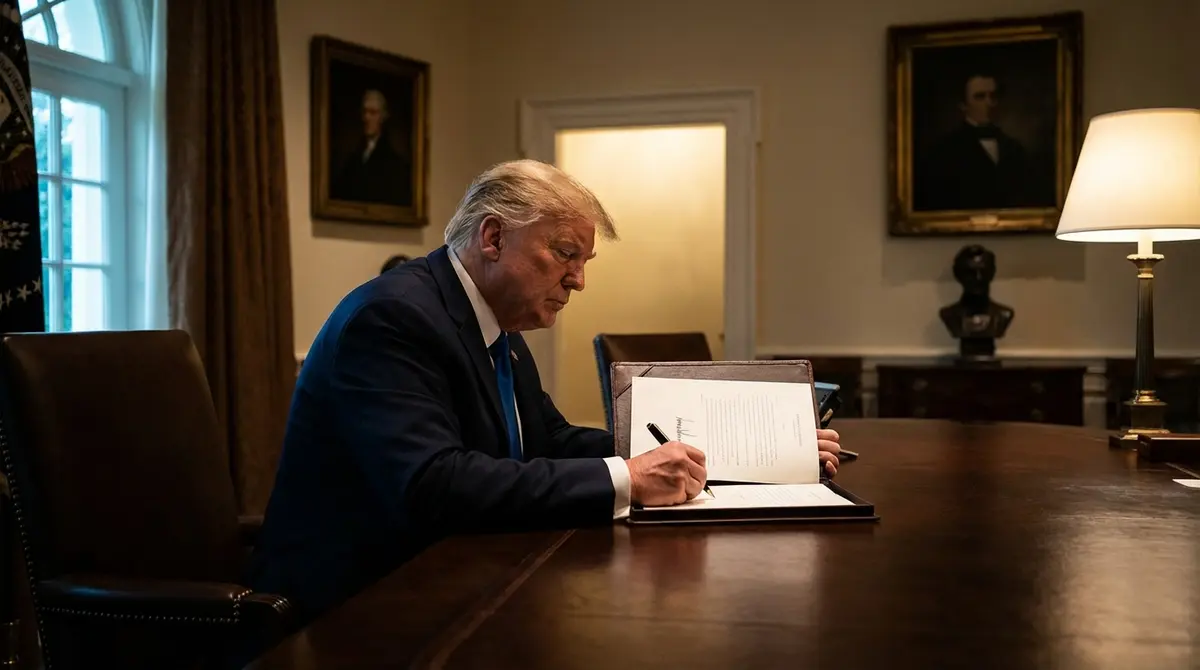
While the rhetoric was heating up, the administration’s lawyers were already digging through the archives. Hours after the ruling, President Trump signed a new executive order. Instead of relying on the now-blocked IEEPA authority, the new order invokes Section 122 of the Trade Act of 1974.
This is a fascinating, if dusty, piece of legislation. Section 122 specifically allows the President to impose temporary tariffs—up to 150 days—to address balance-of-payments deficits. It is a much narrower statute than the emergency powers Trump tried to use previously, and it has rarely been utilized for measures this broad.
By switching to this statute, the White House has successfully implemented a new 10% global tariff. It is effectively a stopgap measure. Because Section 122 is designed to be temporary, these tariffs come with a strict expiration date. Unless Congress intervenes within five months to make them permanent, they legally have to dissolve. This sets the stage for a massive legislative showdown later this year.
What is the immediate impact on the market?
For a few hours after the Supreme Court ruling, markets breathed a sigh of relief, anticipating a reduction in trade barriers. That optimism evaporated the moment the new executive order was signed. The switch to Section 122 means the economic reality for importers remains harsh.
The new 10% tariff sustains the high costs for supply chains that have been struggling with volatility for years. However, the nature of this "fix" introduces a new kind of headache: unpredictability. Because the authority is explicitly temporary, businesses now have to plan for a scenario where tariffs might vanish in 150 days—or be codified into law by Congress.
Rep. Brendan Boyle noted that the Court had rejected an attempt to impose a "national sales tax on hardworking Americans," but the immediate reinstatement of duties suggests that the consumer cost impact will persist regardless of the legal reasoning. Furthermore, Trump has signaled he isn’t done, indicating he may use Section 301 (regarding unfair trade practices) and Section 232 (national security) to reinstate other specific duties on China, Canada, and Mexico that were tied to fentanyl and trade deficits.
Between the Lines
The Supreme Court may have won the battle for constitutional interpretation, but the Executive Branch is currently winning the war for economic reality. By utilizing a 150-day stopgap, the administration has shifted the burden of action to a polarized Congress, effectively daring lawmakers to let the tariffs expire and face attacks for being "weak on trade." For the tech and manufacturing sectors, this is arguably a worse outcome than a clear loss; businesses can adapt to high taxes, but they cannot adapt to regulatory chaos where the rules of global trade might flip overnight based on which obscure statute is pulled from the shelf next.
![Illustration related to Trump Section 122 Tariff Loophole: What It Means [Analysis]](https://bytewire.press/wp-content/uploads/bytewire-images/2026/02/trump-section-122-tariff-loophole-analysis-75b7e8280f.webp)
![Diagram related to Trump Section 122 Tariff Loophole: What It Means [Analysis]](https://bytewire.press/wp-content/uploads/bytewire-images/2026/02/trump-section-122-tariff-loophole-analysis-cc4f5a5a0f.webp)