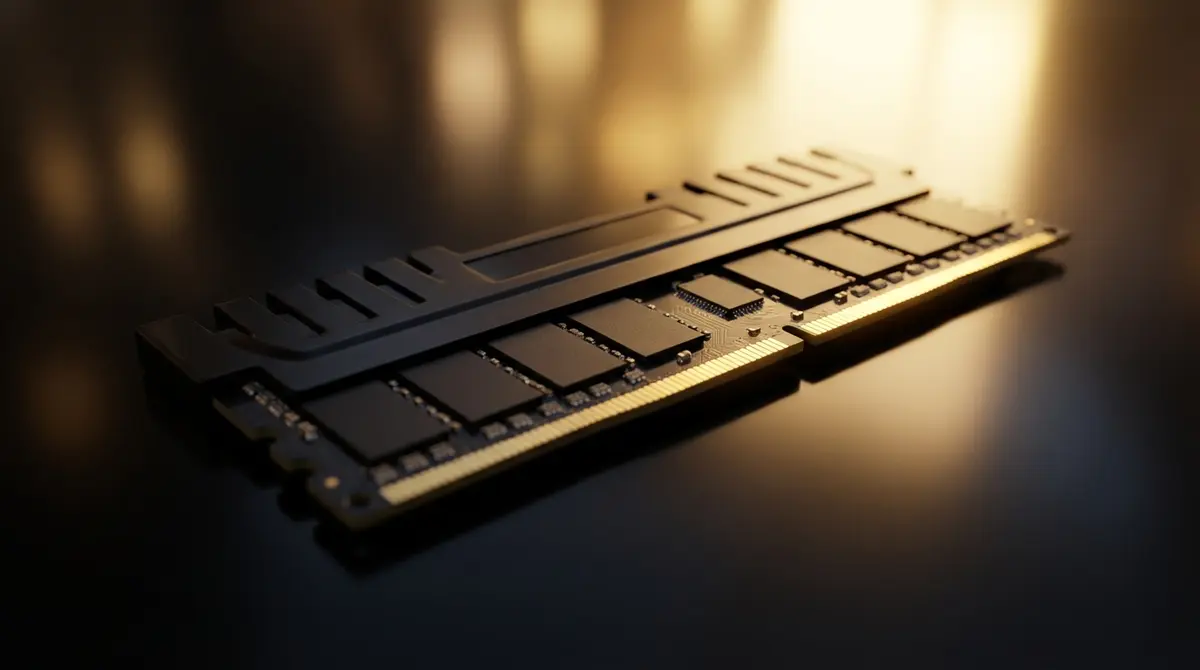
If you have been hoarding old computer parts in your basement, stop apologizing to your spouse and start checking eBay. In a twist that few saw coming, the hottest asset class of early 2026 isn’t a new cryptocurrency or precious metal—it is the humble RAM stick gathering dust in your home lab.
We are currently witnessing what industry insiders are calling ‘RAMmageddon.’ According to recent market analysis, a massive surge in memory prices has turned stockpiled RAM into a surprisingly liquid asset. Second-hand prices have reportedly risen by approximately 700% over the last year alone.
The situation has become so extreme that tech enthusiasts are joking about their hardware investments outperforming traditional markets. Tyson Then, a staffer at Broadcom, recently quipped that we should forget about crypto or gold because "In 2026 VMware Cloud Foundation Home Labbers [are] making bank." But why is this happening, and how long will your wallet have to suffer?
Why are memory prices skyrocketing right now?
You might be wondering how a component that has been relatively cheap for years suddenly became a luxury item. The answer lies in a massive structural shift in how memory is made. The three giants of the industry—Samsung Electronics, SK Hynix, and Micron Technology—have drastically pivoted their production lines.
To meet the insatiable appetite of AI infrastructure, these manufacturers are focusing heavily on High Bandwidth Memory (HBM) and server-grade DRAM. These are high-margin products essential for the data centers powering the latest AI models. Unfortunately, manufacturing capacity is a zero-sum game. By shifting focus to HBM, they have left a gaping hole in the supply of standard DDR4 and DDR5 memory used in regular PCs and consumer electronics.
This pivot has created a severe shortage, leading to "allocation-only" ordering status for many buyers. Essentially, if you aren’t a massive corporate partner, you get what you get—at a premium. TrendForce analysts have revised their estimates sharply upward, predicting that DRAM contract prices will surge by a staggering 90 to 95 percent quarter-over-quarter in Q1 2026 alone.
How expensive has server memory actually become?
If you are managing enterprise IT or running a serious home lab, the numbers are inducing some serious sticker shock. The shortage is hitting server-grade hardware particularly hard as hyperscalers rush to lock in supply for their own build-outs.
According to the latest data, server DRAM prices are projected to rise by over 60 percent in the first quarter of 2026. To put that in real-world terms, consider the standard 64GB RDIMM. In the fourth quarter of 2025, you could pick one up for around $450. Today, just a few months later, that same stick of memory is commanding over $900.
Counterpoint Research backs this up, reporting that general memory prices have already risen 80 to 90 percent in Q1 2026. It is a seller’s market, and right now, the manufacturers hold all the cards. While companies like Apple have reportedly secured long-term supply contracts to shield themselves from the worst of these hikes, most downstream consumers and businesses are exposed to the full force of the price jump.
Is this shortage going to last through 2027?
The outlook for the immediate future suggests this isn’t a quick blip on the radar. The shortage is causing a crisis for enterprise IT departments and OEMs, forcing many to revise budgets or delay hardware refreshes entirely. When the cost of memory doubles in a single quarter, the math for upgrading a server farm changes instantly.
While manufacturers are enjoying record profits from this high-demand environment, analysts are warning that the shortage could persist well into 2027. The demand for AI capabilities isn’t slowing down, which means the production lines for HBM will likely remain prioritized over standard DIMMs for the foreseeable future.
The Bigger Picture
This price surge represents a fundamental decoupling in the hardware market. For the last decade, we have grown used to memory being a commodity—cheap, plentiful, and easy to upgrade. That era appears to be pausing. We are seeing an "AI Tax" applied to general-purpose computing; because fabrication plants are finite, every wafer used for an AI accelerator’s memory is one less wafer for your laptop or server.
The winners here are clearly the memory fabricators and the hyperscalers with the capital to secure long-term contracts (like Apple). The losers are small-to-mid-sized businesses and hobbyists who are now priced out of routine upgrades. If you have spare DIMMs sitting in a drawer, hold onto them—they might just be the best performing asset in your portfolio this year.