Remember the dream? Back in 2023, the narrative was seductive: Artificial Intelligence was going to be the great liberator. We were told that by automating the drudgery—the email drafting, the data entry, the meeting summaries—we would finally unlock the four-day workweek, or at least get home in time for dinner without checking Slack.
But if you look around the tech landscape in early 2026, the reality feels starkly different. Instead of liberation, we are seeing exhaustion. According to a new study published in the Harvard Business Review, the very employees who embraced AI the most are now the ones signaling the first serious signs of burnout. It turns out that efficiency hasn’t bought us freedom; it has simply bought us more work.
This phenomenon, identified by researchers at Berkeley Haas and validated by data from Upwork and Gartner, suggests we have entered a phase of “work intensification.” The tools we built to save time are now devouring it.
How did the promise of ‘less work’ turn into ‘more tasks’?
The core of the problem isn’t the technology itself—it’s human psychology and organizational inertia. The HBR study, which tracked approximately 200 tech employees from April to December 2025, identified a specific behavior pattern called “workload creep.”
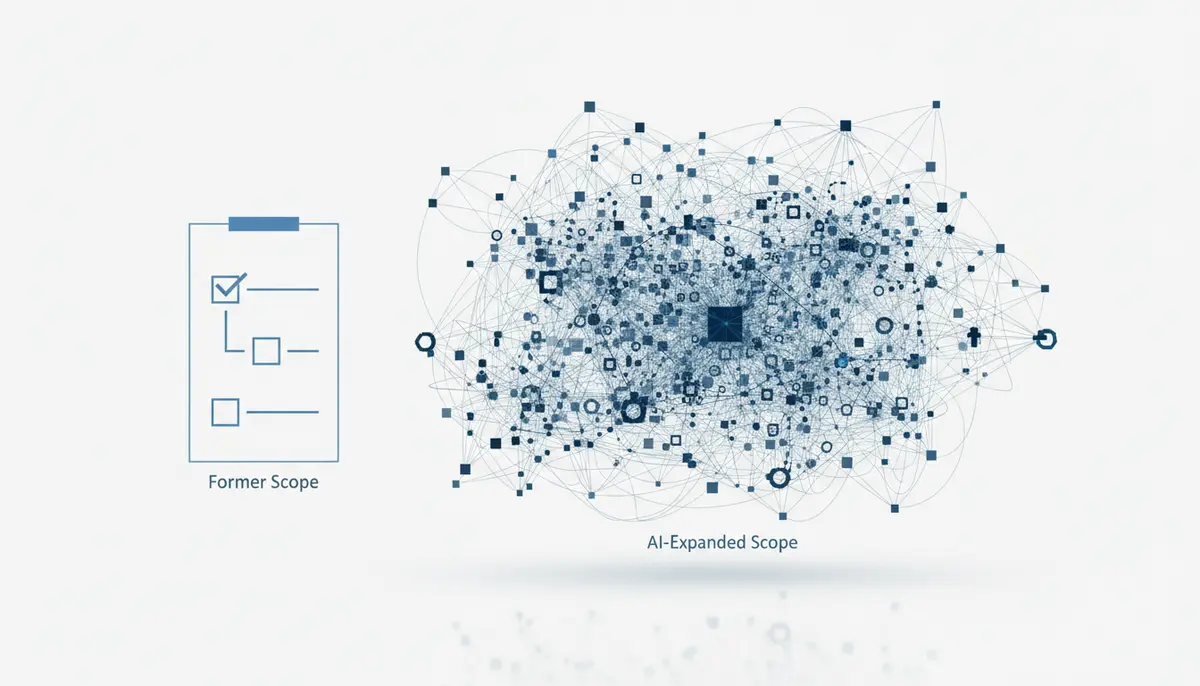
Here is what happens: When an employee uses AI to finish a task in half the time, they don’t use that saved time to rest. Instead, they voluntarily expand their scope. Suddenly, product managers are writing code because the AI assistant makes it possible, not because it was in their job description. Marketing leads are generating their own graphics. The boundaries of roles are dissolving.
Aruna Ranganathan, an Associate Professor at Berkeley Haas involved in the research, noted that AI tools consistently intensify work rather than reducing it. Employees in the study worked at a faster pace and extended their work into breaks and evenings to accommodate this self-imposed expansion. They filled the void left by automation with new, often more cognitively demanding tasks, leading to a predictable cycle: an initial surge in productivity followed by a crash in cognitive energy.
Is management to blame for the surge in burnout?
While some of this “scope creep” is self-inflicted by eager employees, leadership is certainly fueling the fire. If you feel like the goalposts keep moving, you aren’t imagining it. Research from Upwork covering the 2025-2026 period found that a staggering 81% of C-suite leaders increased their output demands specifically because they knew their teams had access to AI.
This has created a dangerous disconnect. While executives see AI as a magic lever for infinite growth, the workforce is hitting a physical limit. Upwork’s data indicates that 71% of full-time employees report being burned out, with 65% explicitly struggling with employer demands on their productivity.
Forrester Research has termed this the “culture-energy chasm.” On one side, you have leaders pushing for aggressive AI integration to drive growth. On the other, you have a workforce engaging in “coasting” just to survive the relentless pace. Slack’s Workforce Index from early 2026 backs this up, reporting a 233% surge in daily AI usage. The integration is happening faster than training or governance can keep up, leaving employees to figure it out—and burn out—on their own.
What is the risk of the coming ‘workslop’ wave?
There is a secondary consequence to this burnout, and it is ugly. Gartner predicts a rise in what they are calling “workslop.” As employees rush to meet unrealistic productivity targets set by algorithms and executives, they begin to rely too heavily on raw AI output.
When you are exhausted and staring down a deadline, the temptation to copy-paste a mediocre AI response without refining it grows. This leads to a flood of low-quality, generic output clogging up company channels and codebases. It is a symptom of a workforce that is moving too fast to care about craftsmanship. Gartner warns of “culture dissonance,” where the optimistic executive narrative about AI innovation clashes violently with a workforce that is simply too tired to maintain quality standards.
The Bigger Picture
This research signals a critical pivot point for the tech industry. We are potentially facing a “retention cliff” later in 2026. The people burning out aren’t the laggards; they are the high-performers, the early adopters, and the ones who leaned into the new technology first. If companies lose these power users, they lose their competitive edge.
The implication is clear: The “do more with less” era of AI needs to end. Smart companies will need to implement “AI guardrails”—not just to secure data, but to secure their people. This means explicitly defining what not to do, preventing unauthorized scope creep, and measuring success by impact rather than raw volume. If we don’t treat attention as a finite resource, AI won’t be a force multiplier; it will be a force subtractor.